Showing posts with label problem solving. Show all posts

Friday, April 9, 2010

Teaching what you know

  If you be a lover of instruction, you will be well instructed.
       —Isocrates+

When I insisted on attending art school instead of a traditional university, my mother balked.  She kept insisting that I at least study teaching art, so I’d have something to “fall back on.”  However well intentioned and practical her advice was, I determined never to be a teacher.  So — how odd to find myself teaching now that I’m in my 50s and have much less patience than when I was younger.  I tend to be less than organized, to be polite about it, and often can’t see the forest for the trees, but I’m learning.  It never dawned on me that a grown person wouldn’t know you had to rinse your brush periodically, until a student asked me why her entire painting was brown. 

OLYMPUS DIGITAL CAMERA         Instruction does not prevent waste of time or mistakes; and mistakes themselves are often the best teachers of all.
         — James Anthony Froude

I thought it was lip service when I heard teachers say they learned as much from their students as the students learned from them.  It’s true!  Preparing lessons forces one to really think through their process, and watching others come up with solutions for their ideas can lead you in all kinds of new directions.  Creating ways to teach what you do in a limited time frame is also a great exercise. OLYMPUS DIGITAL CAMERA         I’ve been silk painting for over 20 years and was stumped when Jerry’s Artarama asked me to teach a two-hour class.  After wandering around the store with my hands in my pockets for a while, I came up with a short project idea that would whet students’ appetites.  It came off quite well and each student’s project was completely different from mine or anyone else’s. 

Sharing knowledge does not diminish one’s talent.
— Me

Which leads me to a point often brought up by artists and crafters:  why teach someone else to do the thing you’re trying to make your living at?  Aren’t they just out to steal your ideas?  Am I shooting myself in the foot by sharing my ideas?  No, no and no!  Teaching a person to read doesn’t mean they can write your story, does it?  Teaching someone a skill can often make them appreciate more fully what goes into the making of your art.  Altruism pays!          

+Isocrates the orator, not Socrates the philosopher, in case you were worried about that.

Wednesday, June 10, 2009

Improving your products with Attribute Listing

As we all know, creative inspiration sometimes requires a jump start, particularly when a deadline looms. In a previous post, I described how the SCAMPER technique acts as a creative trigger for ideas. SCAMPER, of course, is only one creative thinking tool in a treasure chest filled with idea-generating techniques. Another useful tool for creative inspiration is Attribute Listing.

Back in the 1930s, Attribute Listing was devised to develop new and/or improved products from existing or known products by breaking them down into their characteristic parts, or attributes, listing individual elements that fit these attributes, and then combining selected elements from some of the attributes in new ways. In the industrial world, for example, a manufacturer might decide to develop a new pen that stands out from its competitors. Some of the attributes of a typical pen might be said to be style, color, ink delivery method, comfort, and type of ink. By identifying specific styles, colors, ink delivery methods, elements of comfort, and types of ink, and then combining the best ideas from each of these attributes, it is possible to develop a new and improved pen. The same is true when a fashion designer develops a new bag, whose attributes might be said to be material (fabric, leather, synthetic), hardware (buckle, button, snap, handle), intended use (book bag, evening bag, laptop bag), and style (formal, sporty, classic, playful). By listing specific possibilities for each attribute of a bag, and then selecting and combining the most appealing ideas, a designer produces a new bag.

Attribute Listing is chiefly a creative thinking tool that is designed to be used in a limited way—to improve upon a pre-existing idea or product. However, the possibilities for improvement of an idea or product are endless. To apply the Attribute Listing technique, follow this five-step plan:

  1. Identify your goal, i.e., what idea or product do you want to improve?
  2. Identify 4 to 8 attributes, or characteristics, of this idea or product. There are no right or wrong answers here; you determine the attributes you want to analyze.
  3. List as many specific ideas for each attribute as you can. Resist the urge to reject ideas; write them down without analyzing them.
  4. Go back through your list of attributes, and circle the best ideas for each one. This is, of course, subjective.
  5. Consider how you might combine the best ideas.
Let’s take a look at how you can use Attribute Listing. If I want to develop an Etsy “Treasury,” a showcase of Etsy products that I believe is special in some way, Attribute Listing provides me with an endless array of ideas. Typical attributes of a Treasury could include theme, style, audience, technique and material. By listing the first ideas that come to mind for each attribute, I will have the start of an Attribute List that I can use to develop a Treasury:

Theme: color, ecological, industrial, nature, floral, toys, songs, books, indoor, outdoor, tools
Style: modern, Western, vintage, Victorian, medieval, eclectic
Audience: adult, women, men, children, teen, baby
Technique: crochet, collage, beadweaving, felting, knitting, metalwork, glassblowing, painting, encaustic, woodworking, sewing, macrame, Scherenschnitte
Material: yarn, fabric, feathers, beads, buttons, paper, glass, wood, metal, plastic

For the purpose of this exercise, I will select the following elements from each Attribute to create a Treasury:

Theme: floral
Style: eclectic
Audience: women
Technique: showcase multiple techniques
Material: showcase multiple materials

Finally, below is a blog-style Treasury of BBEST artists’ floral creations I could develop from the attributes I have listed. Try this yourself the next time you want to create a special Treasury, or to improve upon an idea or product you already have. Creative thinking tools such as Attribute Listing or the previously-described SCAMPER are situation-driven techniques. In other words, much as you would use a hammer and not a block of wood to drive a nail into a board, ideally you can select the right creative thinking tool for the inspirational challenge you are facing.


© 2009 Judy Nolan. All rights reserved. Please note that the images in this post are owned by the artists and may not be used without permission. Simultaneously published at http://sparklines.blogspot.com.

Friday, May 1, 2009

Tweaking your creativity with SCAMPER

We have all experienced the flashes of inspiration that occur when we least expect them—while we’re taking a shower, walking the dog, folding the laundry or simply doing a repetitive task such as crocheting or knitting. Quite often, creativity that seems to have gone on hiatus blind-sides us with new insights when we take a break from the challenge that is facing us, and simply do something different.

We don’t always have the luxury, however, of waiting for inspiration to strike. Deadlines loom, the calendar page flips, the day of reckoning approaches. My husband, who sells for a living, asks, “If you had a problem that must be solved by the end of the month, or your business would go belly up, would you wait for inspiration, or would you get creative in a hurry?” From my experiences with Destination ImagiNation®, the world’s largest nonprofit creative problem solving program, I know that people of all ages can train themselves to generate creative ideas on the spot when needed, with little preparation. We do this through the use of creative problem solving (CPS) tools.

One of these tools is called SCAMPER. What is SCAMPER? It is nothing more than a list of letters—a checklist, if you will—that represents verbs intended to trigger your creative juices. You can use all or just a few of the letters in this made-up word, and you can use them in any order that makes sense to you. Use SCAMPER to generate ideas for upcycling materials, creating a marketing plan, establishing business goals, repairing a seemingly botched project, setting a personal challenge—basically, anything you want! Here’s how the SCAMPER tool works:

S – Substitute. If you’re making a bag and you don’t have a zipper to close it, what else can you substitute? In her Purple Is Hot Bag, Pam of bagsandmorebypam solves that problem with a drawstring.

Purple Is Hot Bag, by bagsandmorebypam

C – Combine. If your goal is to create eco friendly projects by upcycling newspapers, what other materials can be combined with them to produce these products? RushofWings envisioned the combination of dirt, seeds and newspaper for her biodegradable seedling starter pots.

20 Biodegradable Seedling Starter Newspaper Pots, by RushofWings

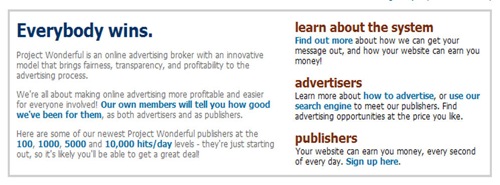
A – Adapt. Can you adapt your blog for marketing purposes? Through Project Wonderful, Pat of onawhimsey offers opportunities for others to advertise on her Art in the Wax blog.

Adapt - onawhimsey

Project Wonderful, utilized by onawhimsey

M – Modify, Magnify, Minify. How can you modify your shop appearance to make visitors stay there longer? How can you magnify your product visibility? How can you minify your marketing efforts while magnifying the sales results (i.e., work smarter, not harder)? Janine of AltheaP has modified her shop banner to illustrate her silk dyeing and painting.

Shop Banner for AltheaP

P – Put to other uses. You have a huge stack of calendars from past years. How else can you put them to use? In her blog post, “Scuppernote ~ A Happenstance Design,” Joon of joonbeam describes how she took last year’s calendar and other recycled papers to create a tri-fold notebook with a Velcro® closure.

Put to other uses - joonbeam

Trifold Notebook with a Velcro® Closure, by joonbeam

E – Eliminate. When you lost a lot of weight, the result was a closet full of blue jeans that you considered taking to the local clothes closet, but…if you eliminate the parts of the jeans you don’t need, what could you do with the rest? Kym of kimbuktu took scissors to a pair of blue jeans to create a blue jean hipster bag.

Recycled Blue Jean Hipster with Scrappy String Piecing, by kimbuktu

R – Reverse. Everyone likes the large clay bowls you make, but you’re getting a little bored with the product line. What products could you create if you flipped the bowls upside down? What if you glazed the outside of the bowl one color, and glazed the inside with its complementary opposite? Suppose you reverse your direction and make miniature bowls instead of large bowls? Make clay boxes instead of bowls? Shape containers into stars, triangles, and cylinders? Pearl of fehustoneware inverted a bowl to form the base of her raku-fired Triple Moon Goddess Celestial incense burner/candle holder/altar piece.

RAKU Triple Moon Goddess Celestial Incense Burner/Candle Holder/Altar Piece, by fehustoneware

Keep in mind that in order for the SCAMPER tool to work, you must set aside judgment until you have finished generating ideas. Tell yourself that none of your ideas are bad; there are only good ideas and better ones! Consider using the SCAMPER tool with others (such as fellow BBEST members), since you probably share many similar challenges. Work toward many ideas from multiple categories (or letters, in this instance!), aim for novelty, and be prepared to add details to your idea to make it work. The clock is ticking, so begin generating ideas now!

© 2009 Judy Nolan. All rights reserved. Please note that the images in this post are owned by the artists and may not be used without permission. Simultaneously published at http://sparklines.blogspot.com.