Showing posts with label history. Show all posts

Friday, April 29, 2011

Under the Arbor

They give us shade on a hot summer day. They provide food and shelter for a vast community of animals. They filter the air and moderate the effects of environmental toxins. These silent leafy guardians are near us every day, and yet we quite often ignore them; we don't celebrate their beauty or learn from their steadfast presence. So today, on Arbor Day, we pay tribute to trees.
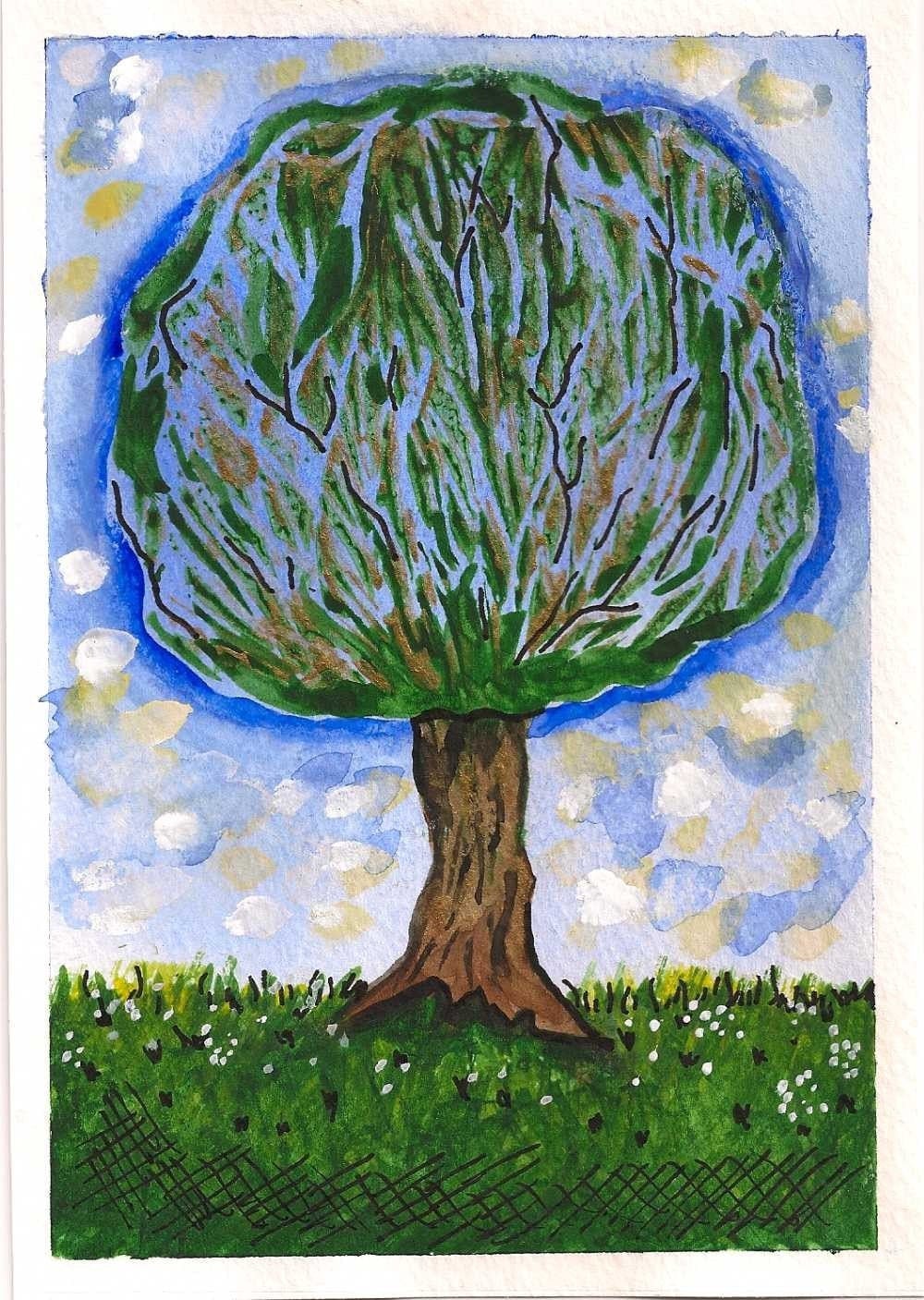

Arbor Day is a nationally celebrated observance that encourages tree planting and tree care. The first Arbor Day took place in Nebraska in 1872; it was the idea of J. Sterling Morton, a journalist and pioneer who came from Detroit to the then treeless plains of Nebraska in 1854. Morton and his wife, both nature lovers, quickly planted trees, shrubs and flowers at their new home. Like other homesteaders, he missed the trees of his former landscape, but he also recognized that trees were important as windbreaks to prevent soil loss, as well as for fuel, shade, and building materials. Morton used his position as a journalist, and later, as secretary of the Nebraska Territory, to advocate for trees and tree planting.

"On January 4, 1872, Morton first proposed a tree-planting holiday to be called 'Arbor Day' at a meeting of the State Board of Agriculture. The date was set for April 10, 1872. Prizes were offered to counties and individuals for planting the largest number of trees on that day. It was estimated that more than one million trees were planted in Nebraska on the first Arbor Day. Arbor Day was officially proclaimed by the young state's Gov. Robert W. Furnas on March 12, 1874, and the day itself was observed April 10, 1874. In 1885, Arbor Day was named a legal holiday in Nebraska and April 22, Morton's birthday, was selected as the date for its permanent observance." (http://www.dfr.state.nc.us/urban/history_of_arbor_day.htm) The most common day for observing Arbor Day today is the last Friday in April.

In 1972, on the 100 year anniversary of the first Arbor Day, the nonprofit Arbor Day Foundation was established to promote education about and conservation of trees. For more information about Arbor Day and to learn more about trees - their identification, protection, planting and care, visit the Foundation's website, http://www.arborday.org.

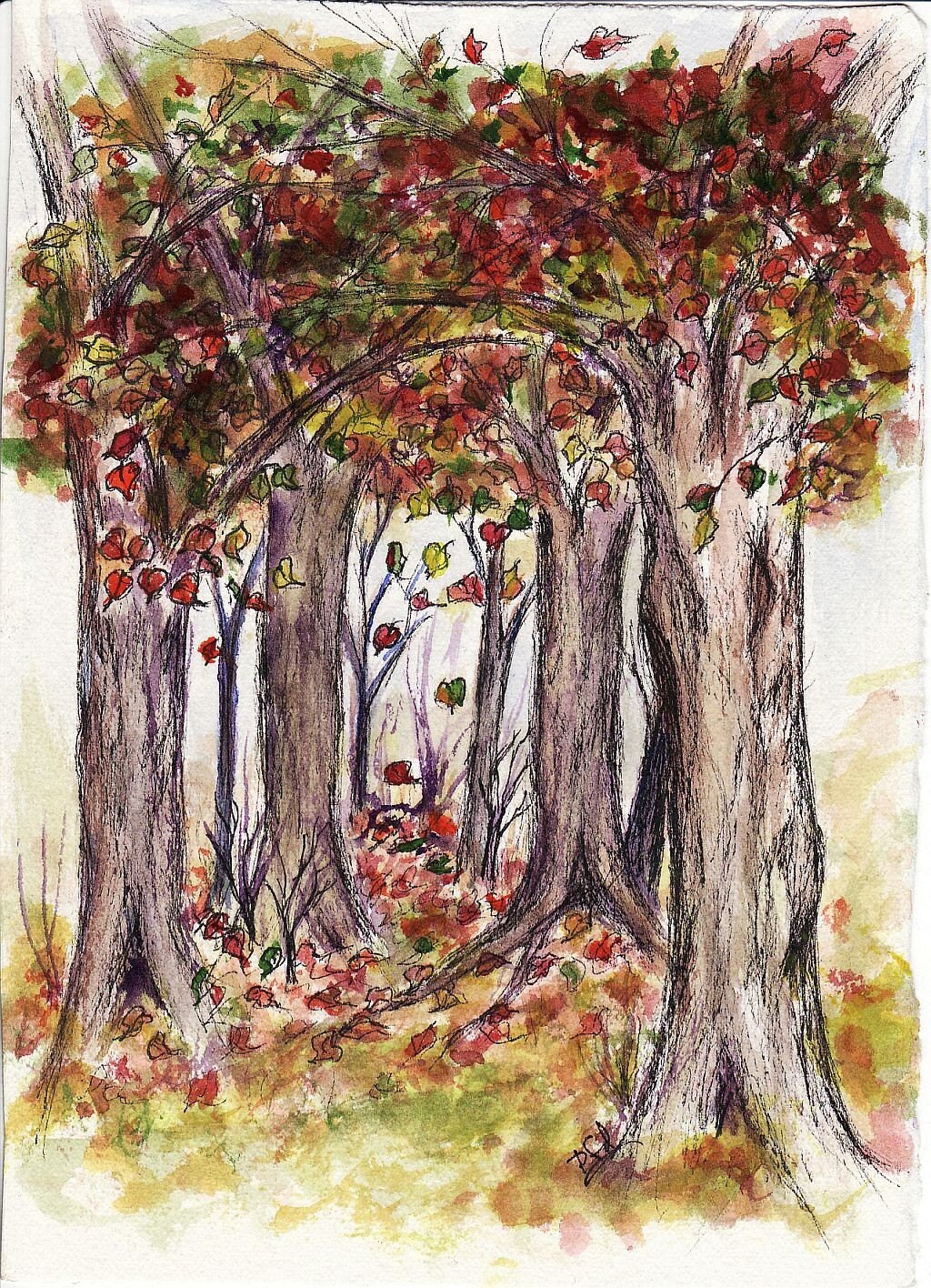
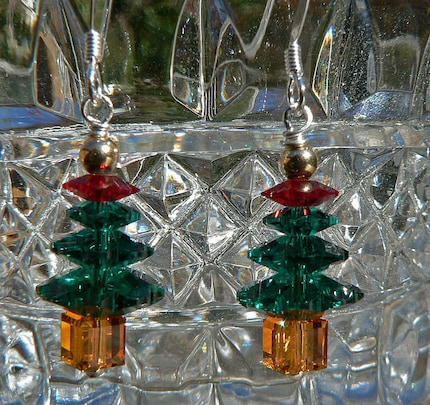
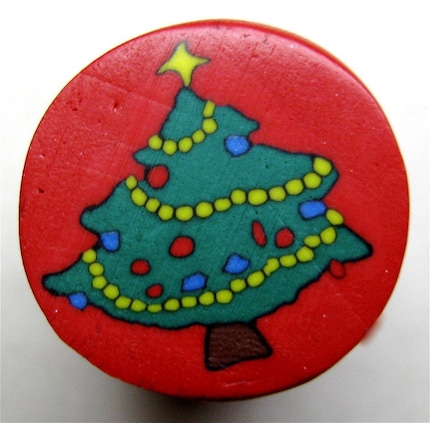
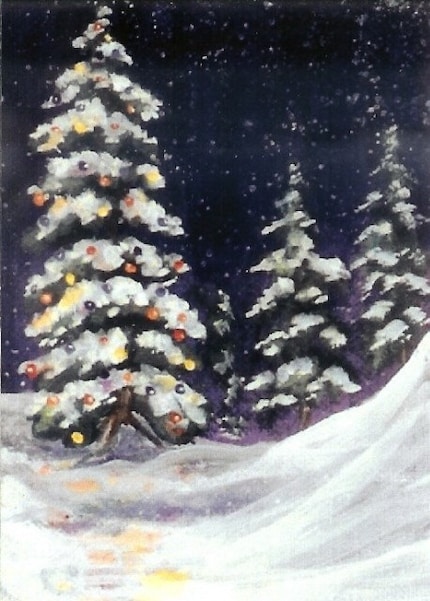
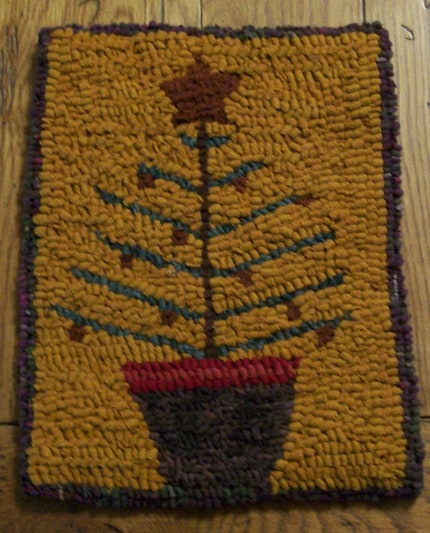
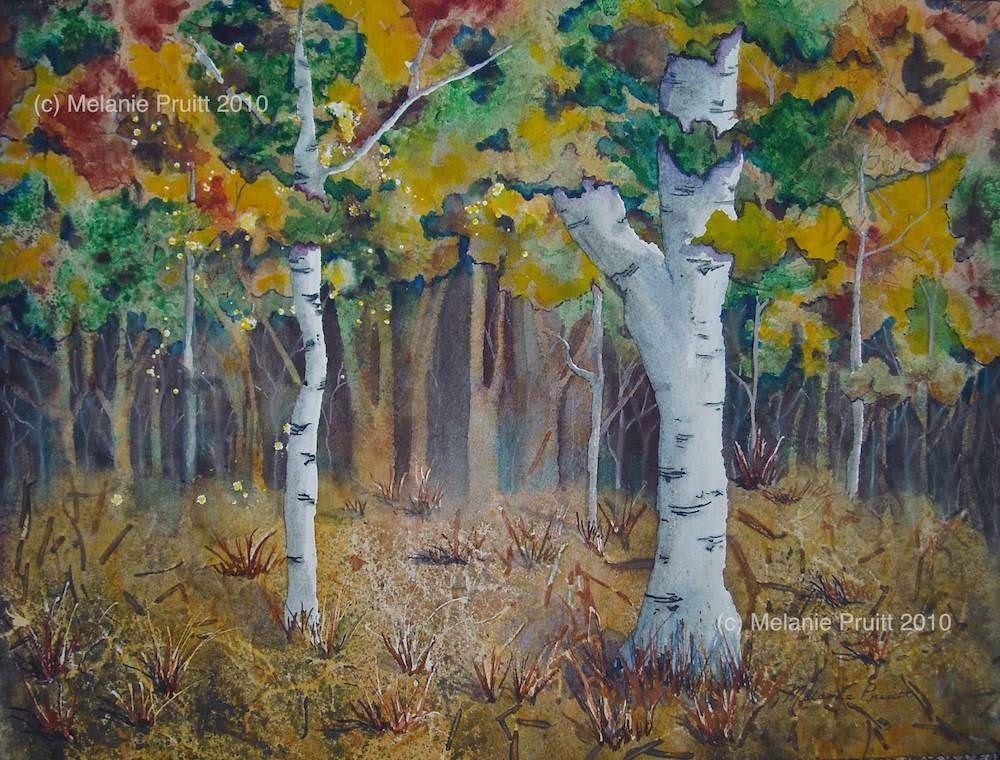
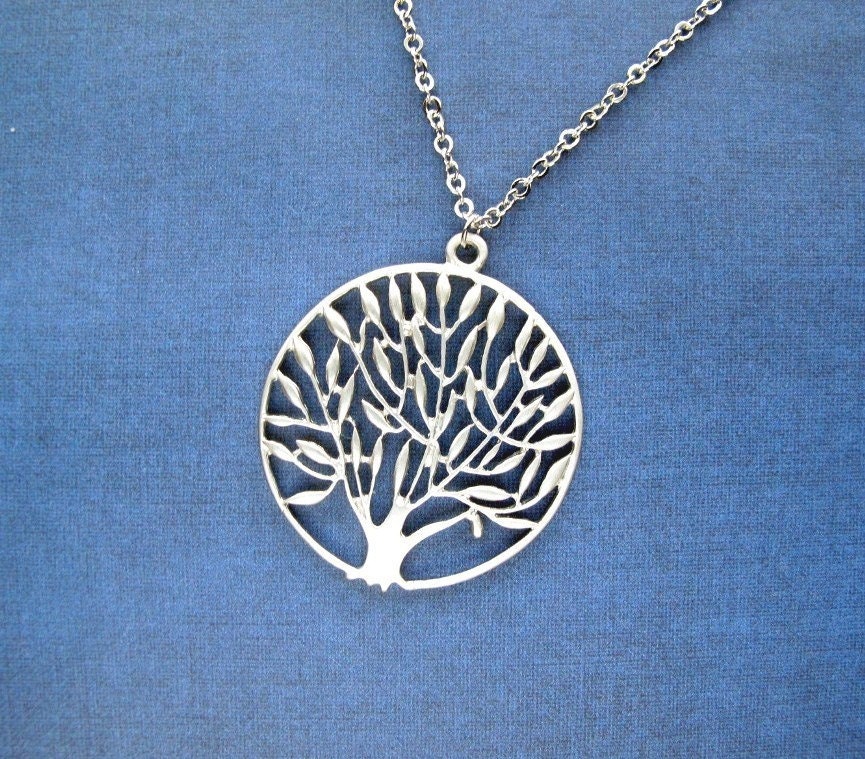
In celebration of the wonderful tree, let's read Ilan Shamir's insightful poem, Advice from a Tree, while we see how BBEST team artisans illustrate the beauty of our leafy friends.

Advice from a Tree
by Ilan Shamir

Dear Friend,
Stand Tall and Proud
Sink your roots deeply into the Earth
 

Reflect the light of a greater source
Think long term
Go out on a limb
Remember your place among all living beings
 

Embrace with joy the changing seasons
For each yields its own abundance
The Energy and Birth of Spring
 

The Growth and Contentment of Summer
The Wisdom to let go of leaves in the Fall
The Rest and Quiet Renewal of Winter
  

Feel the wind and the sun
And delight in their presence
Look up at the moon that shines down upon you
And the mystery of the stars at night.
 

Seek nourishment from the good things in life
Simple pleasures
Earth, fresh air, light
Be content with your natural beauty

Drink plenty of water
Let your limbs sway and dance in the breezes
Be flexible
Remember your roots
Enjoy the view!
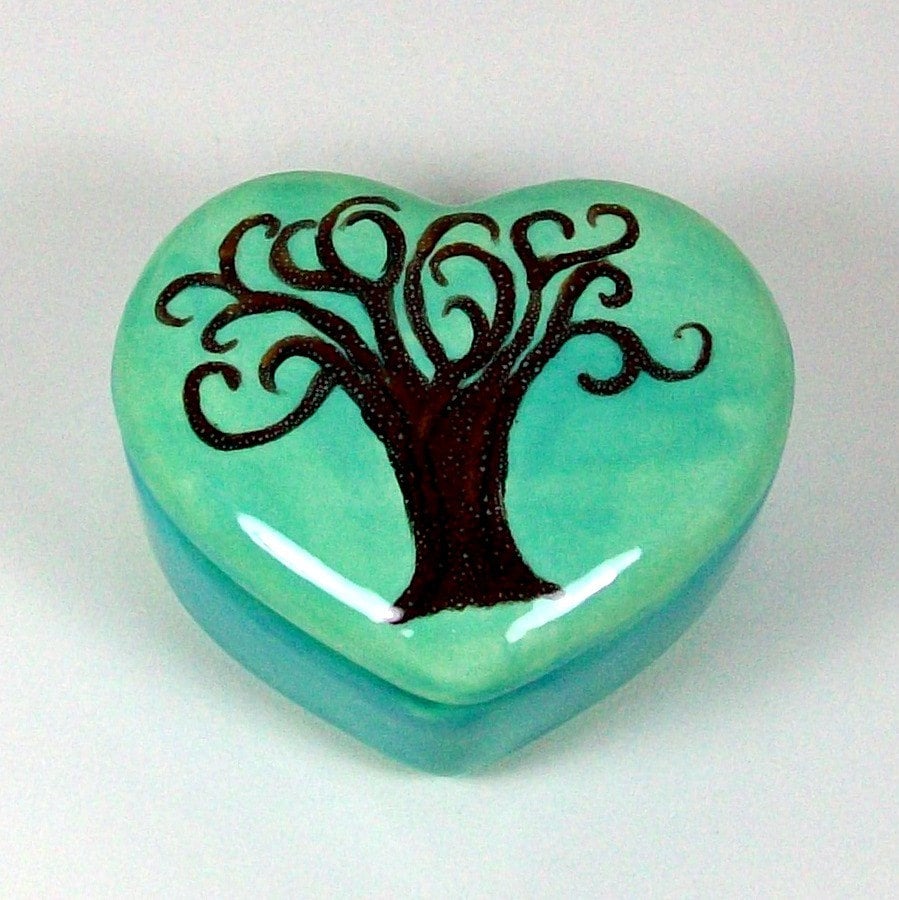


For more about Ilan Shamir and his nature advice, tree-planting greetings, and nature-inspired journals and cards, please visit http://www.yourtruenature.com

Friday, February 18, 2011

Birds!

Some of my BBEST team members will probably know that I am very lucky to spend regular amounts of time at a place in Devon, UK, which I call my ‘bolt hole’. It is a wonderful spot where cabins nestle amongst trees along the water’s edge of an old lake that dates back to Henry VIII. Apparently at one time a convent was nearby from which the nuns used to stroll around the lake in meditation. Perhaps this is why I love the peaceful surroundings whilst sitting on the deck overlooking the water. All you can hear are the birds ranging from wrens to geese! I have a few feeders up nearby so that I can sit and observe our feather friends as they dart in and out grabbing little tidbits.
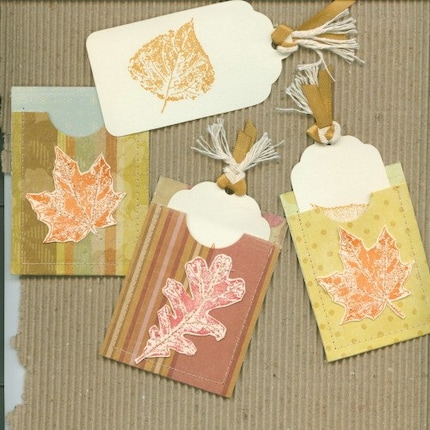
Each country has there own special birds so I won’t bore you with all that I see here. However, it does give me a wonderful opportunity to show off some of the amazing items created by the BBEST Team.

Baltimore Oriole by Sixsisters

image

Hummingbird on the Fly by Hemlock Hollow

image

Bird in the Tree Notebook by MisterPenQuin

image

Two Birds by VanFleetDesign

image

Little Birdie Fused Glass magnet by Chris1

image

At Rest Watercolour of a Chickadee by YankeeGirl

image

Owl Pendant by Chauncey

image

Bird Verdigris painting by JohnieBelinda

image

Bird in Nest by pfd Original Artworks

image

Birds are fascinating creatures as they fly and buzz around. Especially at this time of year when they pair up as Spring approaches and start to organise their nesting sites. Can’t wait to see the baby Moorhens following their mother down to the water and the ducklings all trying to keep up in crocodile lines. Whoever, said they were ugly???

Whilst not all of the above images depict birds from our shores they do show off the amazing talent of the BBEST Team. Thank you for allowing me to show off the creativity here.

Wednesday, December 2, 2009

Fir, feathers and the festive Federbaum

O Tannenbaum, o Tannenbaum
wie treu sind deine Blätter!
Du grünst nicht nur
zur Sommerzeit,
Nein auch im Winter, wenn es schneit.
O Tannenbaum, o Tannenbaum,
wie treu sind deine Blätter!

O Christmas Tree, O Christmas tree,
How lovely are your branches!
In beauty green will always grow
Through summer sun and winter snow.
O Christmas tree, O Christmas tree,
How lovely are your branches!


The lyrics to the above Christmas carol about a Tannenbaum, or traditional German fir tree, are just as popular today as they were back in 1824, when they were written by German organist Ernst Anschütz. In fact, the melody to the song has been adopted by Iowa, Maryland, Michigan, and New Jersey for their state song.


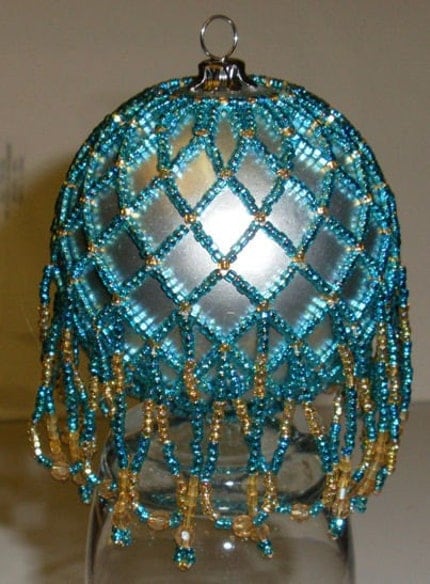
by Chris1

Germans are often credited with the custom of the decorated Christmas tree, although likely the custom dates back to a pre-Christian era. Common folklore tells the story of a monk named Boniface from Devonshire who traveled to Thüringen (Thuringia) in central Germany during the 600s to preach Christianity. It was said that he used the triangular shape of the Tannenbaum to describe the Holy Trinity, which caused people to think of the fir tree as God’s tree. Whether this story is true or not, it is a fact that a Christmas tree decorating industry grew up around Thüringen, which became known for its Glaskugeln (glass ball ornaments) and Lametta (tinsel cut from wafer-thin strips of silver). By 1850, the small town of Lauscha, in this region, became famous for its garlands made from blown glass bugles and beads.


In the mid-1800s, the custom of decorating a live fir tree for Christmas was so widespread that Germans became concerned about deforestation. It was customary for the tops of fir trees to be lopped off since this formed the perfect shape for a holiday tree, but it also prevented future growth and made the tree useless for timber. Laws were passed to limit families to just one tree, and subsequently the birth of artificial trees took place in the form of the Federbaum, or feather tree.


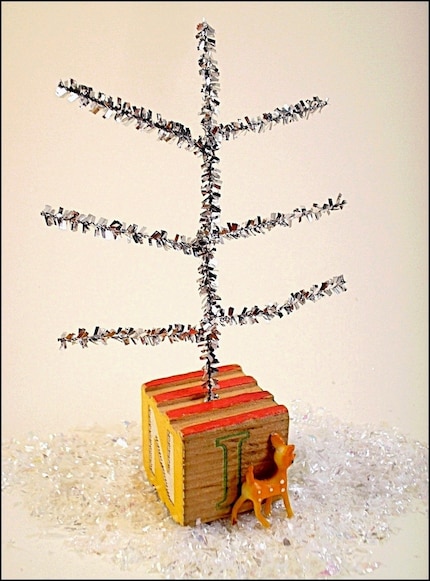
Holiday Feather Tree--Made from Vintage Tinsel Pipe Cleaners
and a Wooden ABC Block,

The earliest German feather trees were made from goose feathers that were dyed green and attached to metal wire or wood dowels. They resembled the white pine trees found in Germany’s mountains, with short-needled branches spaced widely apart, which made both the white pine and the feather tree perfect for hanging ornaments. Composition berries were usually attached to the end of every branch, often serving as candle holders. When Germans immigrated to the United States, particularly Pennsylvania and Texas, they brought their feather trees with them.

Although the commercial version of the feather tree did not really become commonplace until the second decade of the 20th century, there is a story about President Theodore Roosevelt introducing goose feather trees into the White House as the result of his two sons, Archie and Quentin, smuggling a live tree into Archie’s bedroom in defiance of their father’s order that no live trees be used for holiday decorations. True or not, the road for manufactured feather trees was paved in 1913 when Sears Roebuck advertised the first artificial trees in its catalog. These trees featured berries and candle holders on the tips of the branches, much like the handcrafted feather trees that the Germans designed, and a round or square white painted wooden base.  By the 1920s, the use of feather trees in the U.S. was widespread, with trees ranging in size from just 2 inches high to 30 inches, and later as tall as eight feet.

Their popularity was relatively short, however. Just 10 years later, the growth of the tree farm industry caused the use of feather trees to decline. Montgomery Ward began selling feather trees imported from Germany in a wider selection of colors during the 1930s, in the hope that these would catch on, but this did not happen. During World War II, feather trees pretty much disappeared from the landscape when they were no longer imported from Germany.


In the 1950s artificial trees emerged that were made with brush bristles, visca and aluminum, and later with fiberglass and vinyl; these replaced the feather tree. The Kansas Historical Society shares the following description of an aluminum tree from the Sears 1963 Christmas Book:
Whether you decorate with blue or red balls . . . or use the tree without ornaments - this exquisite tree is sure to be the talk of your neighborhood. High luster aluminum gives a dazzling brilliance. Shimmering silvery branches are swirled and tapered to a handsome realistic fullness. It's really durable . . needles are glued and mechanically locked on. Fireproof . . you can use it year after year.


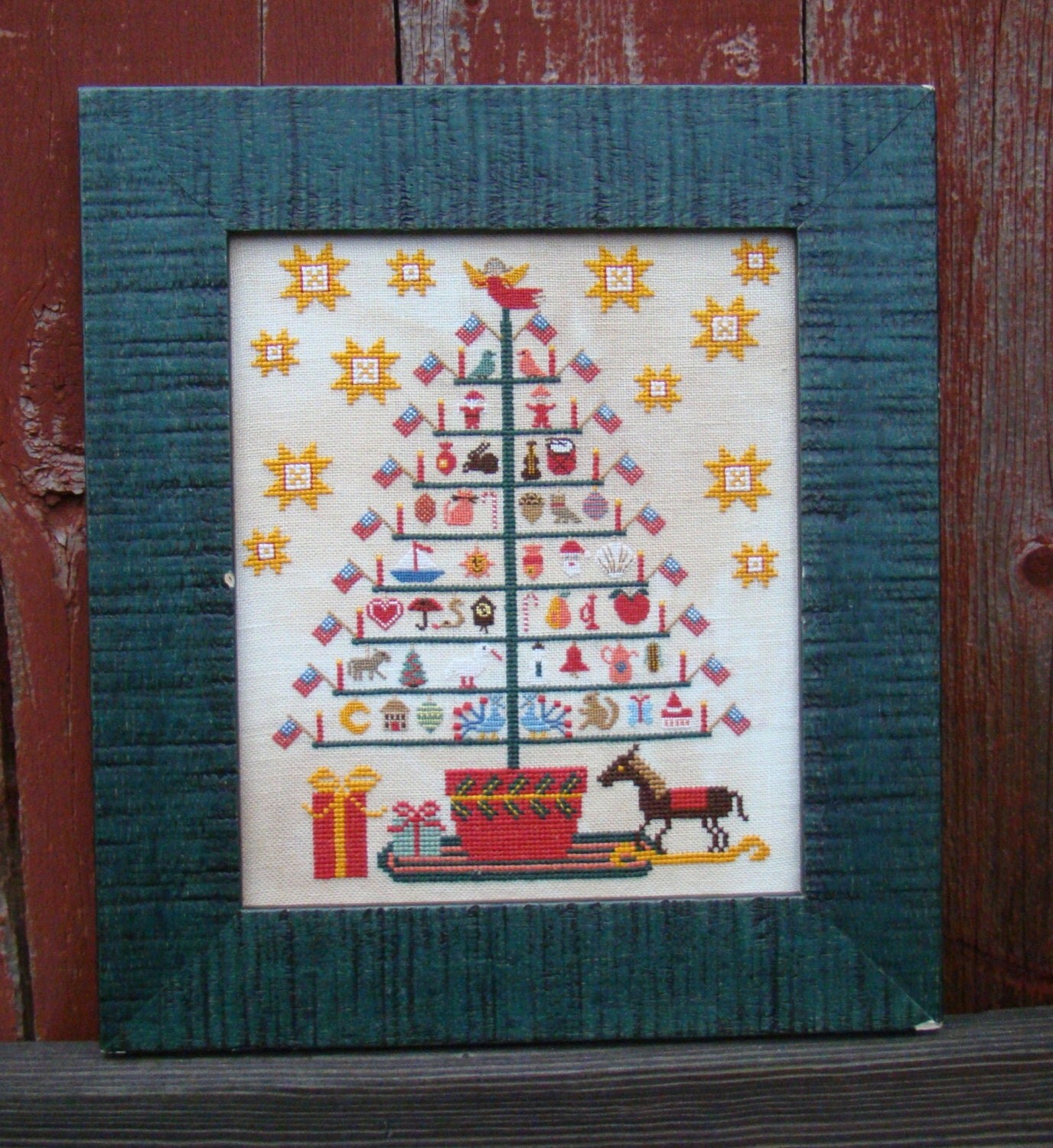
Today the feather tree is often associated with period history, especially German-American immigrant history, a Victorian Christmas, folk crafts and antique collectibles. On Etsy, you’ll see the feather tree motif used in hooked rugs and needlework, and a few artisans make table top feather trees by hand. Wood dowel versions of feather trees are also used by needle artists to hang decorations; I own one on which I hang perforated paper cross stitch ornaments.


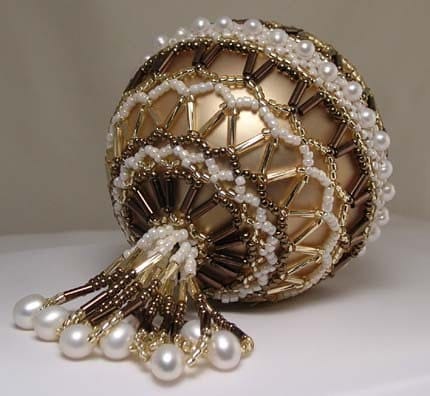
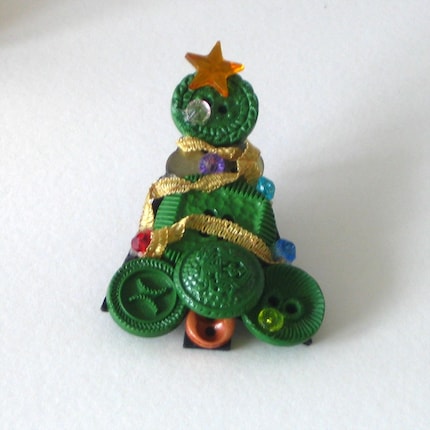
While their use is no longer common, feather trees today are a link to the past, evoking nostalgic childhood memories and a longing for handmade holidays. Perhaps that is part of the charm of the handmade ornaments shown below that have been crafted by BBEST artists, any of which would look wonderful on a traditional Federbaum.


by birose


offered by Nonnie60

© 2009 Judy Nolan. All rights reserved. Please note that the images in this post are owned by the artists and may not be used without permission. Simultaneously published at http://sparklines.blogspot.com.

Friday, November 6, 2009

Just around the corner....Thanksgiving!

People are talking about how close Christmas is and the stores are hauling in all the Christmas stuff. We are bombarded from all directions by it with just a small section left for Thanksgiving. I know...it is an American holiday. For me it conjures up images of turkeys. Here's a cute one from Sweet Rice. Cute little turkey planter that could be filled with some of those autumn flowers or maybe a bunch of colorful leaves! The first Thanksgiving probably did not have turkey but goose, codfish and lobster!


I remember making cornucopias when I was a kid. It was another tradition for Thanksgiving. We used a big horn shaped wicker basket and arranged all of our favorite holiday fruits and vegetables. It was referred to as a horn of plenty or horn of abundance. This is a pretty depiction by Clinging Images.


In 1621, the Plymouth colonists and Wampanoag Indians shared an autumn harvest feast which is acknowledged today as one of the first Thanksgiving celebrations in the colonies. This harvest meal has become a symbol of cooperation and interaction between English colonists and Native Americans. Although this feast is considered by many to be the very first Thanksgiving celebration, it was actually in keeping with a long tradition of celebrating the harvest and giving thanks for a successful bounty of crops. Native American groups throughout the Americas, including the Pueblo, Cherokee, Creek and many others organized harvest festivals, ceremonial dances, and other celebrations of thanks for centuries before the arrival of Europeans in North America. We think of the colonists dressing in clothes similar to these cute candles found at By The Wayside.


On the table might have been found bowls made from gourds such as this one from Yarrow1, probably not as pretty but just as useful.


Fall harvest brings us lots of pumpkins! The Lord's Living World has this nice pumpkin basket that can be used throughout the fall season.


And from Aroma Fields we can get this great candle to fill our homes with the smell we associate with Thanksgiving...pumpkin pie!


You might think about sending a package to someone, thanking them for being a part of your life. A good one to start with might be this from Vintage Legacy Studio. What a lovely thing to receive in the mail!


We all have memories of Thanksgiving growing up. Sixsisters has this ACEO depicting one of her memories of Thanksgiving. Why not share one of yours with us on the thread?


Take a few minutes and browse the BBEST shops. Be thankful for living in a time where we can so quickly share our thoughts with others, can sell our wares to the world and never leave our chairs.

Wednesday, November 4, 2009

The cutting edge of paper crafting tools

Like many other Etsy sellers who sell handmade paper goods, my paper crafting studio is filled with designer papers, adhesives, embellishments, and tools of all types and sizes. There are so many tools, in fact, that they spill into other rooms in the house, wherever they will fit. But among my favorites are those from Fiskars, the business that many of us think of as the “scissors company.” Over time, my personal collection of Fiskars cutting implements has grown to include pinking shears, rotary cutters, scoring blades, a button shank remover, embroidery scissors, paper cutters, paper punches, garden shears, and more. My first Fiskars product, however, was a pair of orange-handled fabric shears that I used when I learned how to sew.


Clockwise, from top center: Fiskars pinking shears,
cardboard cutter, rotary cutter, embroidery scissors,
button shank cutter, fabric shears

The story about orange scissor handles goes back to 1967, when Fiskars manufactured its first plastic-handled scissors. The designer wasn’t sure whether the final product would have red, black or green handles, but in the process of making prototype plastic-handled scissors, he used leftover orange resin from a molding machine intended for Fiskars juicers. Much to his surprise, the orange scissors were popular—so popular, in fact, that employees chose orange over black by a vote of nine to seven for the final plastic-handled Fiskars scissors. Three dozen years later, in 2003, the color orange was trademarked in Finland as “Fiskars Orange®.” You’ll see that color in most of Fiskars’ consumer products and packaging today.
Fiskars table top paper cutters

Fiskars itself is a 360-year-old company whose roots go back to Finland, which is where its corporate headquarters is located. It employs more than 4,000 employees worldwide, and produces a wide variety of home, office and outdoor tools.


Fiskars paper punches
 
The company was founded in 1649 by a Dutch merchant named Peter Thorwöste, when Finland was under Swedish rule and Sweden was known as the center of iron manufacturing. Thorwöste was allowed to build a blast furnace and bar hammer in the village of Fiskars (Finland) so that he could manufacture cast iron and forged products. Although most of the bar iron that Thorwöste produced was sold in Stockholm (Sweden), he also fashioned nails, thread, knives, hoes, iron wheels and other equipment.

Over the centuries, steam engines, plows and cutlery were added to Fiskars’ list of manufactured goods, and its manufacturing facilities spread to other countries. Meanwhile, all manufacturing in the original ironworks facility gradually ceased operation. In 1992, however, the Fiskars company decided that the way to breathe new life into the old Fiskars Village was to invite artisans, designers and artists to move into the old ironworks facilities, where they could form a cooperative and work. Today Fiskars Village has become a center of Finnish art and design. You can meet some of the artisans through FiskarsVillage Cinema Series.


Left to right: Fiskars embossing tools, cutting mat, eyelet punches,
embossing plates, and texture plate embossing tool

As you view the work of BBEST artists below, it will be apparent that I am not the only one who has benefitted from using Fiskars paper crafting tools, or variations of them from other manufacturers. Although there is no doubt that Fiskars has many competitors today, the fact that it is more than three-and-a-half centuries old—as well as Finland’s oldest company—suggests that Fiskars has a great deal of practice in developing “cutting edge” paper crafting tools.


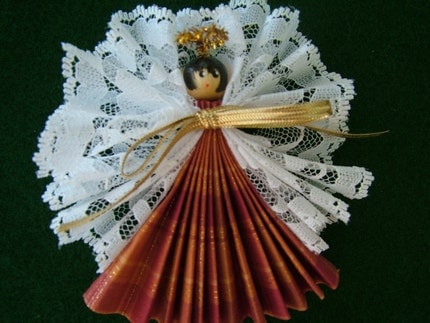
by Kym of PaperParaphernalia


Set of 8 Christmas Tags,

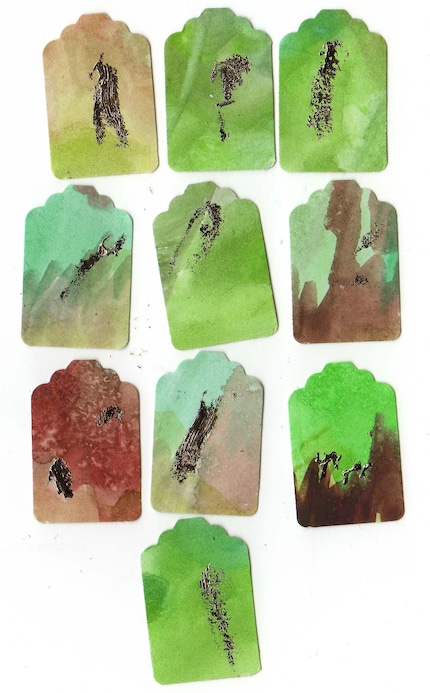
by Jan of circleinthesand


Tags, Hand Colored, Foil, Set of 10,

Surprise Fibers, Autumn, Green, Brown,

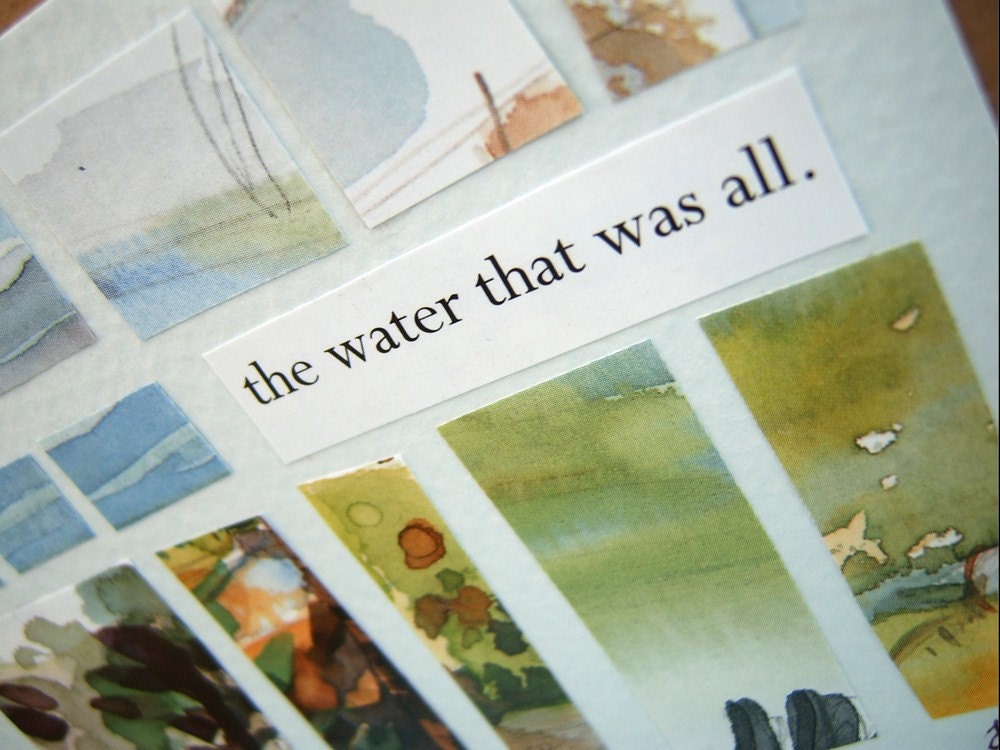
by Myfanwy of paperpatches


8.7 ... the water that was all,

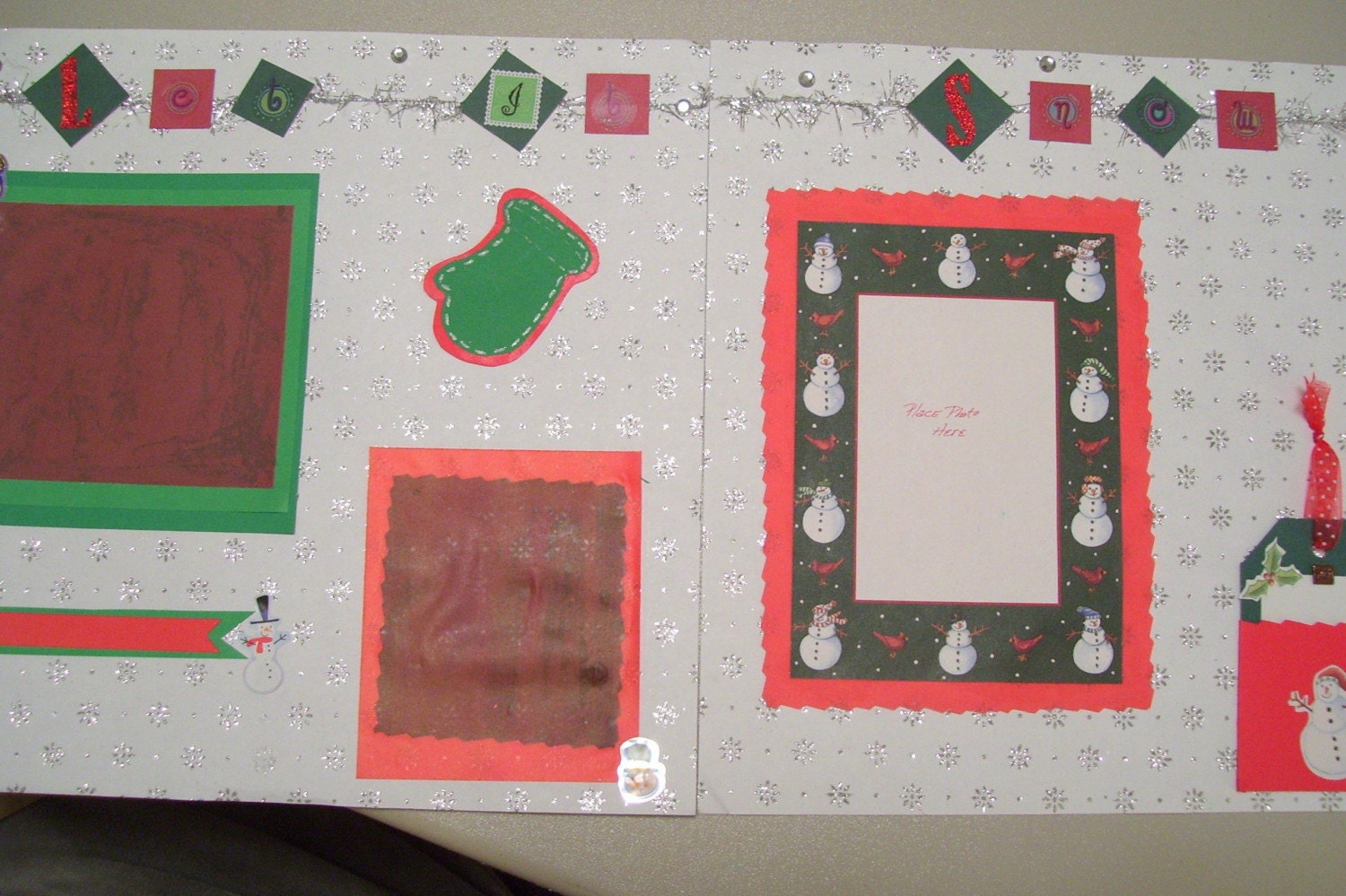
by Joon of joonwalk


Let it Snow Pre-made scrap book pages,

by Tammy of uniqueXpression


You can learn more about Fiskars, its history, Fiskars Village and its craft division by visiting these Web sites:
© 2009 Judy Nolan. All rights reserved. Please note that the images in this post are owned by the artists and may not be used without permission. Simultaneously published at http://sparklines.blogspot.com.

Wednesday, October 21, 2009

Breakfast on Saturday night

This past Saturday, as my husband and I prepared our evening meal, a “breakfast-like supper” consisting of fried eggs, bacon and toast, I began thinking about how common it is for our friends and family members to eat a morning meal at the end of the day. When I was growing up, my father peeled potatoes for crisp potato pancakes on Saturday nights, or he mixed a batch of batter and ladled it into our waffle iron. My husband reports that in his family, it was not unusual to have similar meals on weekend nights. In many family-style restaurants, in fact, breakfast or brunch (a combination of breakfast and lunch items served a la carte) is available all day, particularly on weekends. Is this an American custom? I’m really not sure. Ken Albala, in Food in Early Modern Europe, says that the word breakfast comes from the Latin word disjejunare, which means to un-fast. This word became disnare in the Romance languages, or disner in Olde French—eventually dinner in English. “Thus,” says Albala, “the word dinner actually means breakfast.”


I do know that dining traditions—and the times that people eat—differ according to geography, culture, occupation and economic conditions. An exchange student I knew in high school, for example, spent a year in Finland, where she learned to eat six meals a day. When my husband and I lived in southern California, it was commonplace for employers to hire a catering truck to bring in a mid-morning snack that consisted of sugary donuts and over-sized blueberry muffins, hot dogs and chili dogs, and almost anything you could heat in a tortilla: tacos, tamales, burritos,  enchiladas. Farmers and ranchers usually labor for hours outdoors, right after the sun rises, before they sit down to breakfast, and those on a tight budget often take advantage of what the land produces plentifully: grain-based foods.


In the United States, breakfast traditions have evolved over time. For example, early pioneers followed the lead of Native Americans who grew corn, cooking many corn-based products. These included breads prepared with various methods, such as corn pone pan-fried in oil, griddle-fried Johnnycakes, and ashcakes that were wrapped in cabbage leaves and cooked in the ashes of a campfire. Hoecakes were cooked on yes! the side of a hoe, and corn dodgers were mixed from cornmeal, water, buttermilk and baking powder. It is likely that today’s buttermilk pancakes and tortillas grew out of these early practices.


In addition to enjoying a broad range of corn-based breads, American settlers’ eating habits were heavily influenced by European dining traditions. Colonists of the late 1600s, for example, ate a simple continental breakfast of bread or porridge, accompanied by beer. By the early 1800s, the continental breakfast included a selection of breads and butter, cold meats, coffee and tea. During the Victorian Age (mid-1800s to 1900), Americans—particularly the middle class—had more income, so breakfasts became wide-ranging affairs with many different foods. These included hot cereal, fish, sausages, meat pies, breads with marmalade, butter and jam, bacon and eggs, fruit and vegetables—not too unlike an American brunch, but perhaps heavier in the meat department. Some typical menu items included broiled mackerel, poached eggs with asparagus tips, lamb chops, muffins, and cheese-and-crackers, served with beverages such as orange juice and coffee.


The breakfast cereals of the modern day were not common until the 19th century, when Victorians ate oatmeal. Unlike today’s instant oatmeal, however, they cooked it to death. They soaked the hulled oats overnight in water, then boiled it for four to twenty-four hours. Will Keith Kellogg, a Seventh-Day Adventist, created Toasted Corn Flakes as the result of this tendency to cook oats so thoroughly. He accidentally cooked oats too long; when they dried, they became flakes. But decades before Kellogg’s Battle Creek Toasted Corn Flake Company was founded, the Quaker Oats company registered its cereal as a trademark, and in 1875 began selling oats in boxes. “Quick oats” arrived in 1922, instant oatmeal in 1966, and flavored oatmeal by the 1970s, when many of the younger Boomers were in high school.


But what about the donuts and pastries that also characterize many American breakfasts? When German, Dutch, and Scandinavian immigrants came to the United States, they brought their coffee cake recipes with them. These original cakes were not the sugary concoctions with which most of us are familiar, but bread-like baked goods. Over time, however, they changed. In the kitchens of northern European immigrants, coffee cakes became donuts and pastries filled with sugared fruit, cheese, yogurt and other creamy fillings, accompanied by a cup of coffee and a bit of friendly chat known as a Kaffeeklatsch. According to Evan Jones in his book, American Food: The Gastronomic Story, “. . . . The term coffee klatch became part of the language, and its original meaning—a moment that combined gossip with coffee drinking—was changed to define the American version of England’s tea, a midmorning or midafternoon gathering at which to imbibe and ingest . . . .”


I’m still not sure how breakfast has evolved into an evening meal, but Regina Charboneau, who writes for the The Atlantic Food Channel, suggests that breakfasts for dinner “may have been borne of lean times, maybe after the Civil War or during the Great Depression.” She explains that during the Great Depression of the 1930s, many people from the Deep South were already accustomed to doing without because boll weevils had destroyed their cotton crops. To ease the economic burden this put on families, people stretched their budgets by preparing breakfast for dinner. Whether or not the same reasoning applies today, breakfast for dinner appears to be a common practice—and a tasty one.


For more information about breakfast history, visit the following Web sites:
© 2009 Judy Nolan. All rights reserved. Please note that the images in this post are owned by the artists and may not be used without permission. Simultaneously published at http://sparklines.blogspot.com.