Showing posts with label how-to. Show all posts

Friday, April 9, 2010

Teaching what you know

  If you be a lover of instruction, you will be well instructed.
       —Isocrates+

When I insisted on attending art school instead of a traditional university, my mother balked.  She kept insisting that I at least study teaching art, so I’d have something to “fall back on.”  However well intentioned and practical her advice was, I determined never to be a teacher.  So — how odd to find myself teaching now that I’m in my 50s and have much less patience than when I was younger.  I tend to be less than organized, to be polite about it, and often can’t see the forest for the trees, but I’m learning.  It never dawned on me that a grown person wouldn’t know you had to rinse your brush periodically, until a student asked me why her entire painting was brown. 

OLYMPUS DIGITAL CAMERA         Instruction does not prevent waste of time or mistakes; and mistakes themselves are often the best teachers of all.
         — James Anthony Froude

I thought it was lip service when I heard teachers say they learned as much from their students as the students learned from them.  It’s true!  Preparing lessons forces one to really think through their process, and watching others come up with solutions for their ideas can lead you in all kinds of new directions.  Creating ways to teach what you do in a limited time frame is also a great exercise. OLYMPUS DIGITAL CAMERA         I’ve been silk painting for over 20 years and was stumped when Jerry’s Artarama asked me to teach a two-hour class.  After wandering around the store with my hands in my pockets for a while, I came up with a short project idea that would whet students’ appetites.  It came off quite well and each student’s project was completely different from mine or anyone else’s. 

Sharing knowledge does not diminish one’s talent.
— Me

Which leads me to a point often brought up by artists and crafters:  why teach someone else to do the thing you’re trying to make your living at?  Aren’t they just out to steal your ideas?  Am I shooting myself in the foot by sharing my ideas?  No, no and no!  Teaching a person to read doesn’t mean they can write your story, does it?  Teaching someone a skill can often make them appreciate more fully what goes into the making of your art.  Altruism pays!          

+Isocrates the orator, not Socrates the philosopher, in case you were worried about that.

Friday, June 26, 2009

Peeling away pounds through creativity

When I’m writing a blog post, a poem, a letter—or anything else—my husband knows better than to open a discussion about today’s mail or tomorrow’s weather. I am so absorbed in my task that I simply don’t hear him. Some creativity experts refer to this experience of shutting out distractions and focusing on the moment as “being in the zone” or “experiencing flow.” Whatever you call it, there is no doubt that productivity is in action! It may also be that you snack less while you’re being creative.

That is the premise behind Julia Cameron’s The Writing Diet: Write Yourself Right-Size. One day while browsing titles on a bookstore table, I ran across this book. Cameron, who has written many books about creativity, including The Artist’s Way, maintains that “. . . weight loss is a frequent by-product of creative recovery. Overeating blocks our creativity. The flip side is also true: we can use creativity to block our overeating.”

Whether Cameron is right or not (after all, I am drinking a Pepsi as I write this post), The Writing Diet provides its readers with seven writing tools that not only enable you to lose weight, but also to explore your creative inner self, whether you write, paint, fire a pot, sew, or pursue any other creative endeavor. Here, then, is a summary of the tools.

  • Morning Pages. Morning pages are Julia Cameron’s basic tool for creative recovery and weight loss. They represent three pages of stream-of-consciousness writing, answering the question, “What are you feeling?” The idea is that as you write, you identify what is blocking your creativity, and also what leads you to overeat. The pages, of course, are intended for your eyes only.
  • The Journal. Much like the food diary that Weight Watchers® and many other weight loss groups recommend their participants keep, a Journal is a log of the foods that you eat, every time you put anything in your mouth, as well as the times that you feel like eating. The difference between it and a typical food diary is that you jot down what you are feeling at the same time. Over time, the hope is that you will identify negative patterns and change them, and also to reach for your Journal for answers instead of food.
  • Walking. Cameron encourages her readers to walk for at least 20 minutes a day, replacing worry with exercise. She asserts that exercising our bodies not only helps to peel away calories, but it also “grounds” our creative energy in the real world, rather than allowing us to approach creativity as an ethereal, out-of-reach notion. Walking provides time and space to examine our problems and reflect on them, to consciously open ourselves to inspiration and new connections.
  • The Four Questions. The Four Questions are four strategic queries designed to ward off snack attacks, especially at night, when all bets are often off. The four questions are: (1) Am I hungry? (2) Is this what I want to eat? (3) Is this what I want to eat now? (4) Is there something that I can eat instead? The value of these questions is that they are grounded in the reality that you are probably going to succumb to some sort of craving, but that you can make good choices about what you ultimately eat, instead of bad ones. And, of course, when you make better choices about what’s good for your body, that increases your mental well-being and increases your physical creative energy.
  • Culinary Artist Dates. Much as the Artist Dates that Cameron describes in The Artist’s Way are designed to encourage you to expand your comfort zone, once-a-week Culinary Artist Dates are intended to tease you into scheduling a date to explore new, healthy ways to cook, or even to taste foods you might not otherwise choose. Often we associate a diet with deprivation, but the Culinary Artist Date suggests it can be a creative adventure for the palate. You can use this date to take a cooking class, explore fresh foods at the farmers market, learn about spices, or treat yourself to a special meal at an ethnic restaurant.
  • HALT. Participants of recovery programs are often encouraged to identify the patterns or situations that lead them to become (H)ungry, (A)ngry, (L)onely or (T)ired because this is when they are most vulnerable to whatever weakness they are suffering. This is just as true about overeating as it is about the times we feel creatively blocked. HALT is a common sense rule, encouraging us to eat at regular intervals, and to journal about anger, loneliness or tiredness (or paint, fuse glass, shape clay, or utilize our creative talents in some way) instead of allowing these emotions to trigger overeating.
  • The Body Buddy. A Body Buddy is a partner in your quest to lose weight and release your creativity. He or she is neither an enforcer nor someone who agrees with you all the time, but is instead a sounding board, or someone who helps you to see inside yourself with more clarity than you can by just reading your own Journal. A Body Buddy is someone with whom you can share your Journal to discover new insights about what leads you to overeat. Often a Body Body is someone who is also an overeater, in which case you can act as checkpoints for each other.

I have to admit that I never consciously thought about using my creative energy to shed pounds, but The Writing Diet provides some food for thought (pardon both the cliché and the pun!). You can read more about creativity in these books by Julia Cameron:
  • The Artist’s Way
  • Walking in This World
  • Finding Water
  • The Complete Artist’s Way
  • The Artist’s Way Workbook
  • The Right to Write
  • The Sound of Paper
  • The Vein of Gold
  • The Artist’s Way Morning Pages Journal
  • The Artist’s Date Book
  • How to Avoid Making Art (or Anything Else You Enjoy)
  • Supplies: A Troubleshooting Guide for Creative Difficulties
  • Inspirations: Meditations from The Artist’s Way
  • The Writer’s Life: Insights from The Right to Write
  • The Artist’s Way at Work
© 2009 Judy Nolan. All rights reserved. Please note that the images in this post are owned by the artists and may not be used without permission. Simultaneously published at http://sparklines.blogspot.com.

Wednesday, June 10, 2009

Improving your products with Attribute Listing

As we all know, creative inspiration sometimes requires a jump start, particularly when a deadline looms. In a previous post, I described how the SCAMPER technique acts as a creative trigger for ideas. SCAMPER, of course, is only one creative thinking tool in a treasure chest filled with idea-generating techniques. Another useful tool for creative inspiration is Attribute Listing.

Back in the 1930s, Attribute Listing was devised to develop new and/or improved products from existing or known products by breaking them down into their characteristic parts, or attributes, listing individual elements that fit these attributes, and then combining selected elements from some of the attributes in new ways. In the industrial world, for example, a manufacturer might decide to develop a new pen that stands out from its competitors. Some of the attributes of a typical pen might be said to be style, color, ink delivery method, comfort, and type of ink. By identifying specific styles, colors, ink delivery methods, elements of comfort, and types of ink, and then combining the best ideas from each of these attributes, it is possible to develop a new and improved pen. The same is true when a fashion designer develops a new bag, whose attributes might be said to be material (fabric, leather, synthetic), hardware (buckle, button, snap, handle), intended use (book bag, evening bag, laptop bag), and style (formal, sporty, classic, playful). By listing specific possibilities for each attribute of a bag, and then selecting and combining the most appealing ideas, a designer produces a new bag.

Attribute Listing is chiefly a creative thinking tool that is designed to be used in a limited way—to improve upon a pre-existing idea or product. However, the possibilities for improvement of an idea or product are endless. To apply the Attribute Listing technique, follow this five-step plan:

  1. Identify your goal, i.e., what idea or product do you want to improve?
  2. Identify 4 to 8 attributes, or characteristics, of this idea or product. There are no right or wrong answers here; you determine the attributes you want to analyze.
  3. List as many specific ideas for each attribute as you can. Resist the urge to reject ideas; write them down without analyzing them.
  4. Go back through your list of attributes, and circle the best ideas for each one. This is, of course, subjective.
  5. Consider how you might combine the best ideas.
Let’s take a look at how you can use Attribute Listing. If I want to develop an Etsy “Treasury,” a showcase of Etsy products that I believe is special in some way, Attribute Listing provides me with an endless array of ideas. Typical attributes of a Treasury could include theme, style, audience, technique and material. By listing the first ideas that come to mind for each attribute, I will have the start of an Attribute List that I can use to develop a Treasury:

Theme: color, ecological, industrial, nature, floral, toys, songs, books, indoor, outdoor, tools
Style: modern, Western, vintage, Victorian, medieval, eclectic
Audience: adult, women, men, children, teen, baby
Technique: crochet, collage, beadweaving, felting, knitting, metalwork, glassblowing, painting, encaustic, woodworking, sewing, macrame, Scherenschnitte
Material: yarn, fabric, feathers, beads, buttons, paper, glass, wood, metal, plastic

For the purpose of this exercise, I will select the following elements from each Attribute to create a Treasury:

Theme: floral
Style: eclectic
Audience: women
Technique: showcase multiple techniques
Material: showcase multiple materials

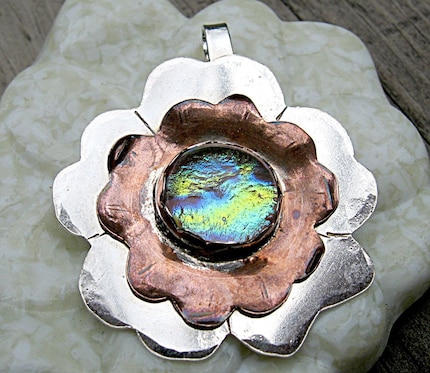
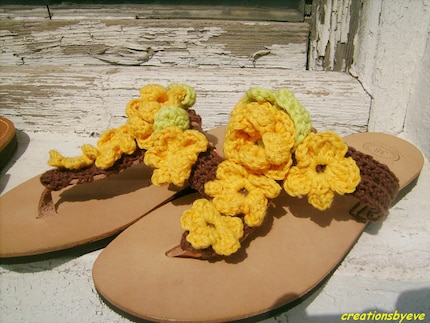
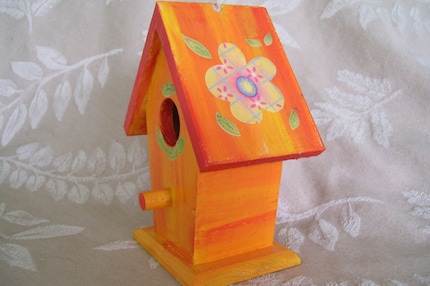
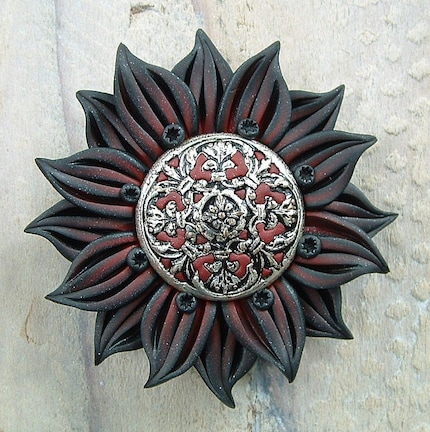
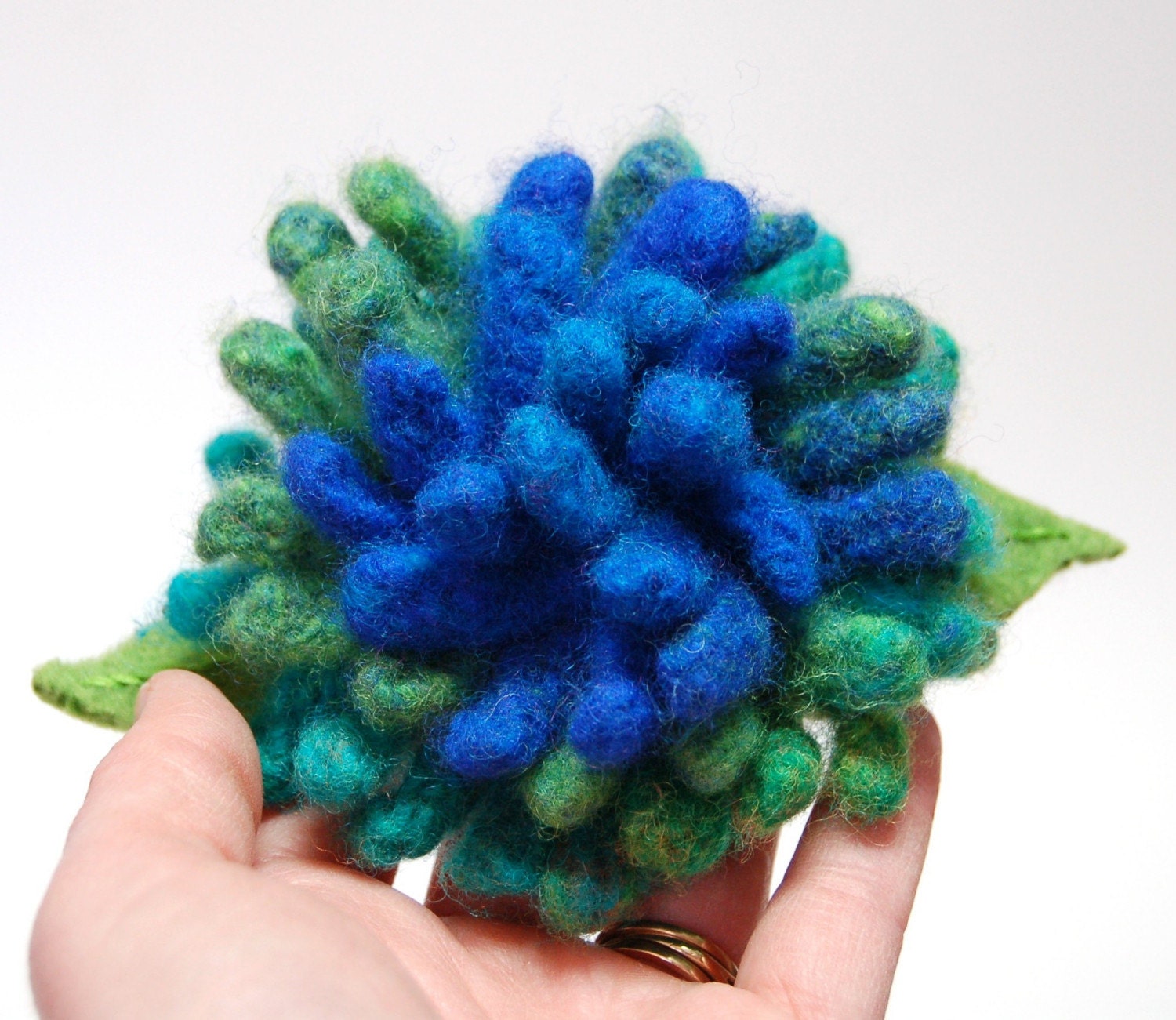
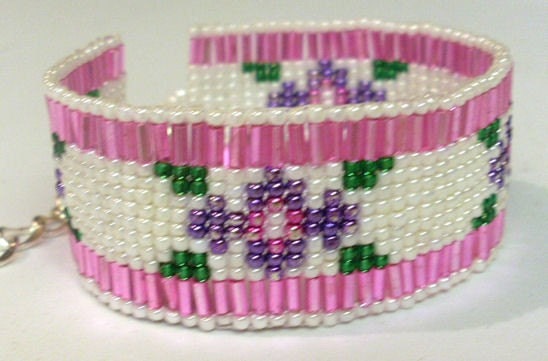
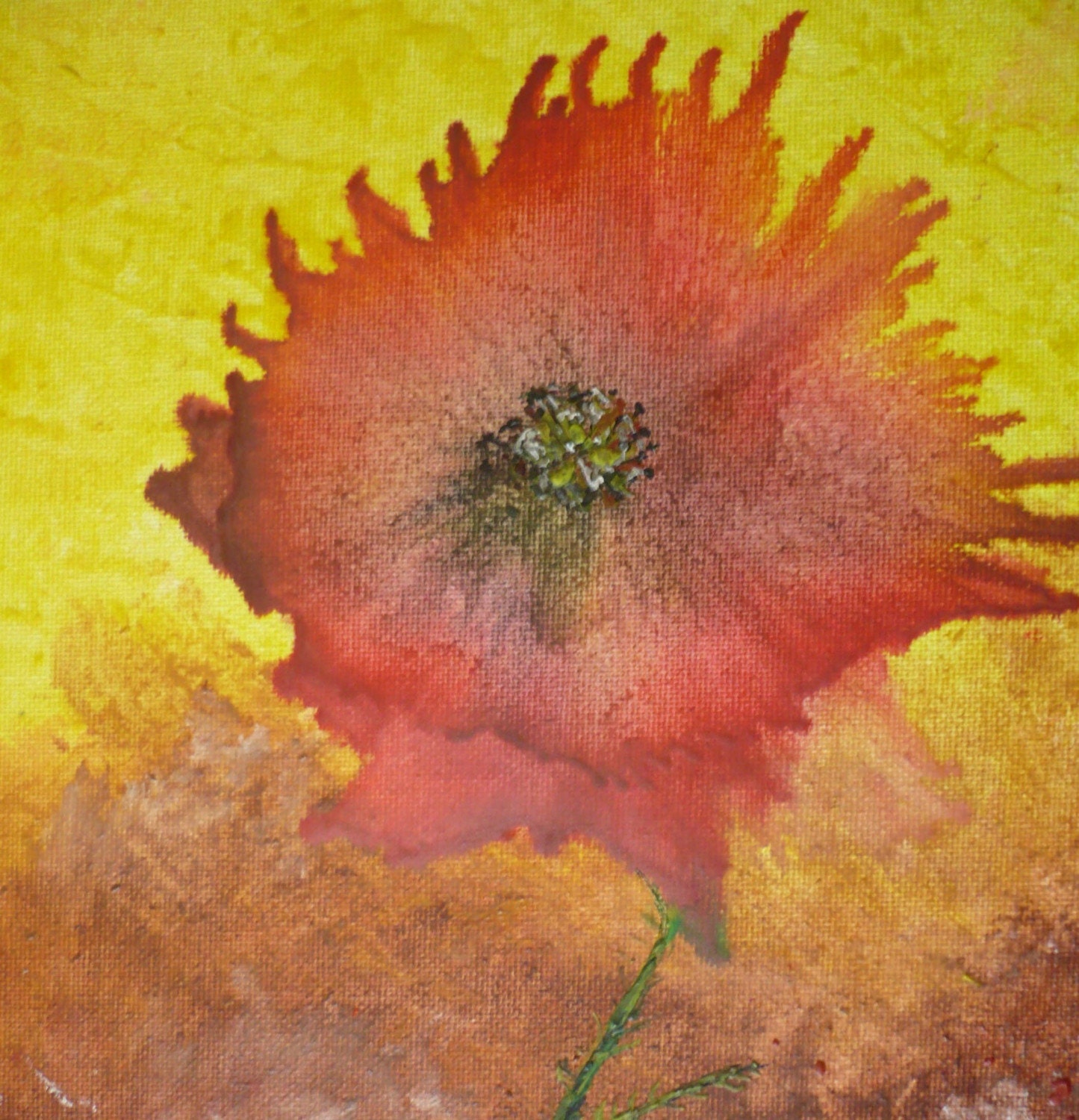
Finally, below is a blog-style Treasury of BBEST artists’ floral creations I could develop from the attributes I have listed. Try this yourself the next time you want to create a special Treasury, or to improve upon an idea or product you already have. Creative thinking tools such as Attribute Listing or the previously-described SCAMPER are situation-driven techniques. In other words, much as you would use a hammer and not a block of wood to drive a nail into a board, ideally you can select the right creative thinking tool for the inspirational challenge you are facing.

© 2009 Judy Nolan. All rights reserved. Please note that the images in this post are owned by the artists and may not be used without permission. Simultaneously published at http://sparklines.blogspot.com.

Friday, May 1, 2009

Tweaking your creativity with SCAMPER

We have all experienced the flashes of inspiration that occur when we least expect them—while we’re taking a shower, walking the dog, folding the laundry or simply doing a repetitive task such as crocheting or knitting. Quite often, creativity that seems to have gone on hiatus blind-sides us with new insights when we take a break from the challenge that is facing us, and simply do something different.

We don’t always have the luxury, however, of waiting for inspiration to strike. Deadlines loom, the calendar page flips, the day of reckoning approaches. My husband, who sells for a living, asks, “If you had a problem that must be solved by the end of the month, or your business would go belly up, would you wait for inspiration, or would you get creative in a hurry?” From my experiences with Destination ImagiNation®, the world’s largest nonprofit creative problem solving program, I know that people of all ages can train themselves to generate creative ideas on the spot when needed, with little preparation. We do this through the use of creative problem solving (CPS) tools.

One of these tools is called SCAMPER. What is SCAMPER? It is nothing more than a list of letters—a checklist, if you will—that represents verbs intended to trigger your creative juices. You can use all or just a few of the letters in this made-up word, and you can use them in any order that makes sense to you. Use SCAMPER to generate ideas for upcycling materials, creating a marketing plan, establishing business goals, repairing a seemingly botched project, setting a personal challenge—basically, anything you want! Here’s how the SCAMPER tool works:

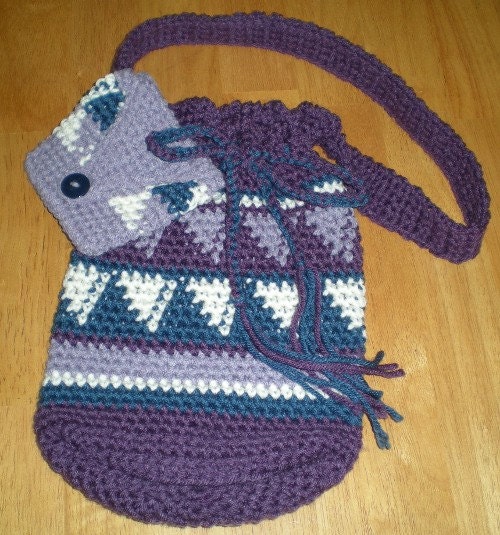
S – Substitute. If you’re making a bag and you don’t have a zipper to close it, what else can you substitute? In her Purple Is Hot Bag, Pam of bagsandmorebypam solves that problem with a drawstring.

Purple Is Hot Bag, by bagsandmorebypam

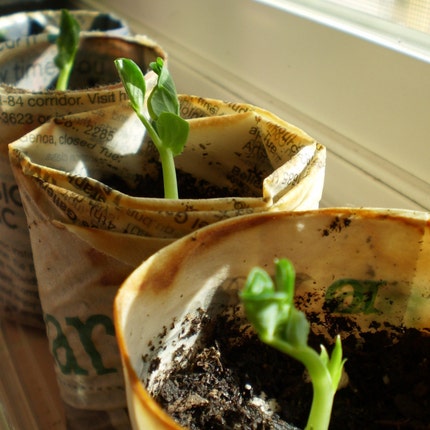
C – Combine. If your goal is to create eco friendly projects by upcycling newspapers, what other materials can be combined with them to produce these products? RushofWings envisioned the combination of dirt, seeds and newspaper for her biodegradable seedling starter pots.

20 Biodegradable Seedling Starter Newspaper Pots, by RushofWings

A – Adapt. Can you adapt your blog for marketing purposes? Through Project Wonderful, Pat of onawhimsey offers opportunities for others to advertise on her Art in the Wax blog.

Adapt - onawhimsey

Project Wonderful, utilized by onawhimsey

M – Modify, Magnify, Minify. How can you modify your shop appearance to make visitors stay there longer? How can you magnify your product visibility? How can you minify your marketing efforts while magnifying the sales results (i.e., work smarter, not harder)? Janine of AltheaP has modified her shop banner to illustrate her silk dyeing and painting.

Shop Banner for AltheaP

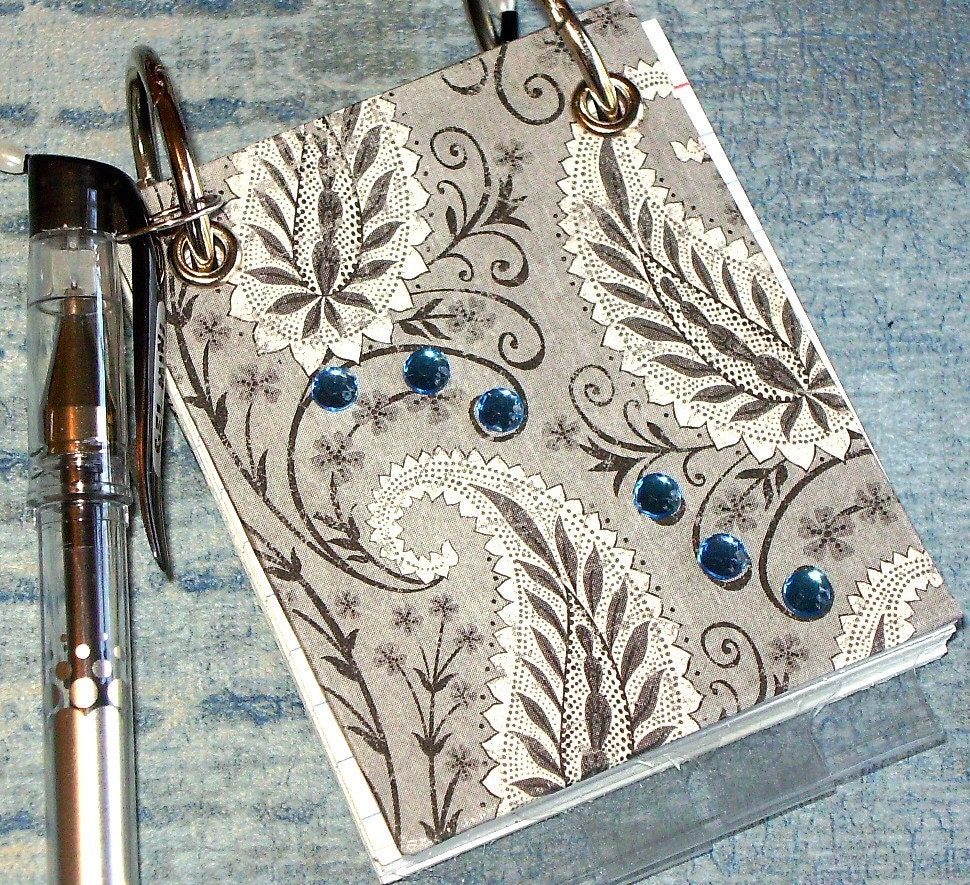
P – Put to other uses. You have a huge stack of calendars from past years. How else can you put them to use? In her blog post, “Scuppernote ~ A Happenstance Design,” Joon of joonbeam describes how she took last year’s calendar and other recycled papers to create a tri-fold notebook with a Velcro® closure.

Put to other uses - joonbeam

Trifold Notebook with a Velcro® Closure, by joonbeam

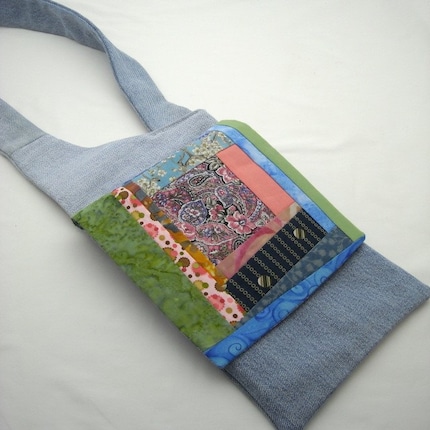
E – Eliminate. When you lost a lot of weight, the result was a closet full of blue jeans that you considered taking to the local clothes closet, but…if you eliminate the parts of the jeans you don’t need, what could you do with the rest? Kym of kimbuktu took scissors to a pair of blue jeans to create a blue jean hipster bag.

Recycled Blue Jean Hipster with Scrappy String Piecing, by kimbuktu

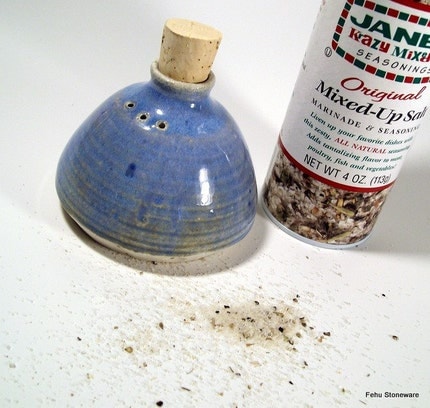
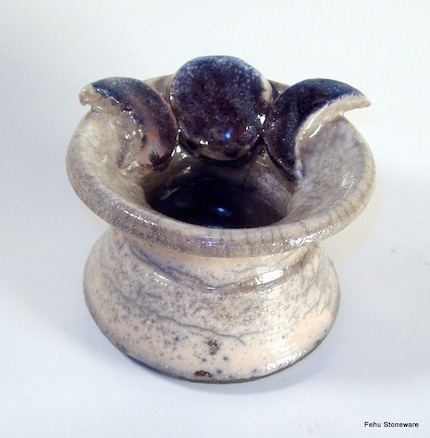
R – Reverse. Everyone likes the large clay bowls you make, but you’re getting a little bored with the product line. What products could you create if you flipped the bowls upside down? What if you glazed the outside of the bowl one color, and glazed the inside with its complementary opposite? Suppose you reverse your direction and make miniature bowls instead of large bowls? Make clay boxes instead of bowls? Shape containers into stars, triangles, and cylinders? Pearl of fehustoneware inverted a bowl to form the base of her raku-fired Triple Moon Goddess Celestial incense burner/candle holder/altar piece.

RAKU Triple Moon Goddess Celestial Incense Burner/Candle Holder/Altar Piece, by fehustoneware

Keep in mind that in order for the SCAMPER tool to work, you must set aside judgment until you have finished generating ideas. Tell yourself that none of your ideas are bad; there are only good ideas and better ones! Consider using the SCAMPER tool with others (such as fellow BBEST members), since you probably share many similar challenges. Work toward many ideas from multiple categories (or letters, in this instance!), aim for novelty, and be prepared to add details to your idea to make it work. The clock is ticking, so begin generating ideas now!

© 2009 Judy Nolan. All rights reserved. Please note that the images in this post are owned by the artists and may not be used without permission. Simultaneously published at http://sparklines.blogspot.com.

Friday, April 17, 2009

Silk Painting, the basics

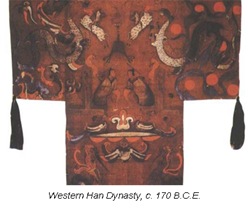
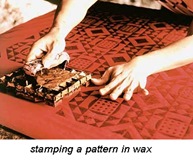
Han_dynasty Silk painting is a truly ancient art.  Silk has been cultivated for over 3500 years, and people painted on silk well before the invention of paper.   Batik cloth seems to have originated in India around the second century C.E and spread throughout Asia over the years.  Batik uses wax to "resist" areas exposed to dyes, leaving the waxed areas the original color of the fabric before it's dyed.  The best known examples of batik are stamped in repeated patterns.   batik

Around the fourth century C.E., Indonesian artists discovered they could use the sap of the pallaquium tree as a resist.  This substance is known as gutta, a rubber-based product that can be stamped or applied in a fine line.  In the past few decades, water-based resists have been gutta developed.  To remove wax resist from a piece requires ironing it between sheets of absorbent paper; removing gutta requires dry cleaning; water-based products can simply be rinsed out with water.   Thank goodness.

Just as the tradition of batik techniques vary greatly around the world, there are also many different ways to paint on silk.  All the methods fall into three general categories: 

  • OLYMPUS DIGITAL CAMERA         Immersion:  You can immerse the fabric in a dye bath for all-over color.  There are lots of ways to bind the fabric before immersing it, resulting in patterns which vary from free as tie dye to as controlled as Japanese shibori.  To make the piece at right, bird shapes were stamped onto grey fabric -- then immersed in wine-colored dye.
  • Direct application:  By laying your fabric flat or stretching it taut, you can use a brush to paint or dye.*  When you apply color to any fabric, the colors runs naturally from one fiber to chardischdetanother, creating beautiful free flowing areas of blended color (as seen on the left).  sealscarf8If you want to keep the colors from spreading into each other, you must apply a finish to the surface of the silk, just as you apply gesso to a canvas.  Note how the watery layers behind the sea lion do not blend into each other, but look like separate stripes?
       woman
  • Gutta serti:  Sertir is a French verb meaning "to contain."  This method emphasizes drawing, as the gutta/resist is used to outline areas of color.  The dye is applied with a paintbrush, and spreads naturally over the fibers until it meets the gutta/resist line.  The figures at right are surrounded by a white line, because that's where the resist was. 

I use the serti method most of the time, because I like the graphic quality of the outline, but also because I think it's magic to watch the color travel from the paint brush to the resist line.  frame1

The photo on the left shows a silk scarf stretched in my studio.  Whether painting a wall hanging, yardage, or a scarf, the method is the same.  All fabrics must be prewashed and ironed.  I sometimes plan my design elaborately, using grid paper and a light table to enlarge it as needed.  Most of the time, however, I just freehand my design directly onto the silk.  I stretch the fabric on a frame and draw the design using clear resist.  Once the resist has dried, I apply professional silk dyes with paintbrushes -- one in each hand and at least one in my mouth. 

The process is meditative, yet immediate, since I must work quickly to keep up with the movement of the dyes.  Once I'm satisfied with the painting, the color is allowed to set for a day or two.  The fabric piece is then rolled in newsprint, wrapped in aluminum foil, suspended over a steam bath, and steamed for 1-3 hours.  Now the piece is colorfast.  After it "cures" for a day or two, I rinse out the resist lines in warm water, let it drip dry, and then iron.  If the hand of the fabric has been affected by the chemicals used to mix the dyes, it gets a bath in professional fabric softener, is dried and then ironed again.   paj4

I could go on and on.  Different fabrics accept color in entirely different ways.  Preparing different types of dyes involves a lot of chemistry, and each brand's chemistry is unique.   Variations in humidity and altitude will affect the action of the dyes.  It's difficult to mix a good brown with French dyes, and turquoise dye smells entirely different than yellow. 

I think most artists are secret alchemists, loving the magic of applying color and line, whatever the surface.  Being a magician is a powerful and addictive business!

____________

*Paints dry as a coating on top of the fabric; dyes bind with the fibers and become part of the fabric.  Paints will affect the hand, or feel, or the fabric when they dry.  Dyes do not change the hand, and the fabrics feel smooth and lush -- what people think of when they think "silk."

Wednesday, March 18, 2009

The power of tutorials

When I'm reading a blog post and run across a crafting how-to piece, I feel as if I've been given a special gift. I sit back and ask myself, "Really? I get this information for free?" That's the power of a tutorial.

Tutorials often teach you something unexpected, something that is potentially useful just for you, or they provide inspiration for a next step you are considering. After I read a post on BBEST artist Liz Plummer's blog about How to create a concertina book, for example, I was inspired to purchase several books about bookmaking. Liz also writes about her Gocco printing process on her blog, as evidenced by the moleskin journal below that includes a Gocco-printed cover.


The writer/artist who writes tutorials is in an especially good position to create a sense in the reader's mind that he or she is an expert about the topic at hand, someone who can be trusted, and possibly someone whose work you might wish to explore further. In short, tutorials clarify who the person is behind the writer's voice, and provide an indirect method of promoting the artist.

When you read Suz of whimseys' Short Tutorial on Eco Cloth Shopping Bag, you're impressed right away by her concern about the earth, and will wish to browse through the products in her shop, which (like the shopping bag in her tutorial) are also made of fabric.

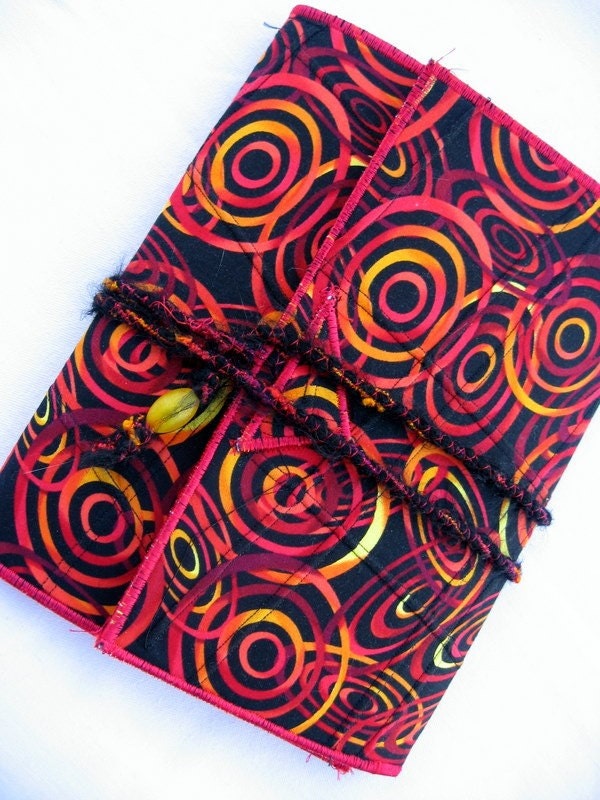
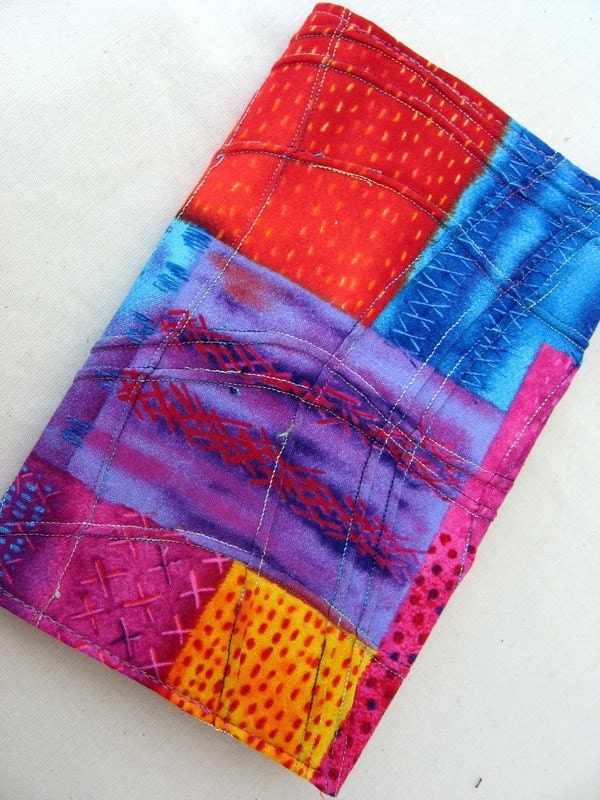
Sherrill Kahn Fabric Bookcover Dayplanner
Journal Book Cover
,
by whimseys

Likewise, Joon of joonbeam inspires trust in her values when you read her blog tutorial, Love Our Earth & Things Can Be Pretty! by golly!, about recycling a grocery sack into a mailing envelope. Joon's writing personality takes you straight to her shop, where (among other items), she promotes ecology-minded practices.


While there are many indie tutorial sites on the Web such as Craftster, CraftStylish and Craft, the tutorials on these sites differ from the tutorials found on blogs. A blog tutorial tends to make you feel that you have a personal connection with the writer, not that you're reading an encyclopedia of instructions. If you have a question or a comment, you can communicate directly with the writer and be reasonably certain that your response will be read in a timely fashion, and that any questions you have will be answered just as quickly.

The writer of a blog tutorial has several decisions to make, however, before posting. These include the focus, the fiber and the format of the tutorial:
  • Focus. What is the reason for the tutorial? Does the tutorial give the reader a taste of what is in the artist's shop, but on a simpler scale? Does the tutorial describe a process that creates curiosity about the artist's products? Does the tutorial establish or confirm the artist's expertise in a particular area? The purpose of the tutorial may be answered by one or several of these questions, but the writer/artist needs to establish a business reason for sharing his or her expertise through a how-to post. Moreover, to justify its existence, that post actually needs to be useful to the reader in some way. Because many people do not realize the extent of design effort and manual dexterity that go into machine knitting, for example, Barb of Blazing Needles cleverly educates her readers about that process in a series of blog posts, beginning with Machine Knitting - Part 1.
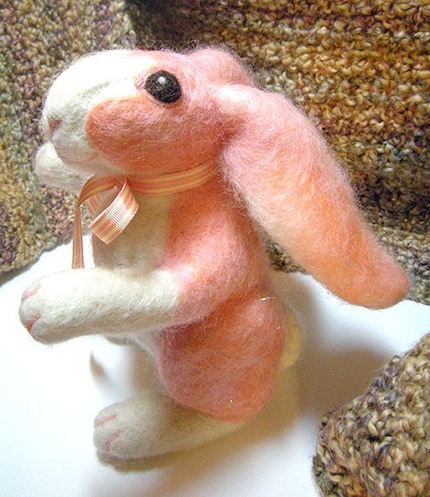
  • Fiber. The fiber of a tutorial relates directly to the content of the post. What is it about? Does the post provide step-by-step directions to produce a product? Does it describe a process? Does it give an historical overview of a specific art or craft? Does it provide general information that can become a jumping-off point for the reader to explore the topic further? Again, the fiber of the tutorial may consist of the answers to one or more of these questions, but it affects the approach the writer/artist takes to the topic, and ultimately the format. When Kimberly of thewildhare writes about her felted rabbit-making process, for example, in Where is the brown bunny? you will find the process so intriguing that you cannot resist visiting her shop to see her cute rabbits.
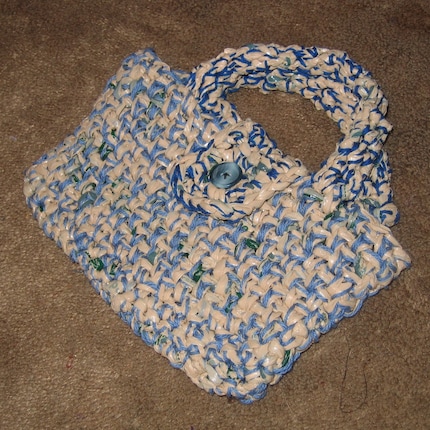
  • Format. The format of a tutorial is determined by both the focus (purpose) and fiber (content) of the post. In its purest form, a step-by-step tutorial includes numbered or bulleted instructions, as well as clear photos. A tutorial that describes a process follows a logical sequence from beginning to end, with photos, but is a little more general. A post with an historical perspective will take the reader through a timeline of stories, again with photos to illustrate significant points. A general information post often provides links to useful information so that readers can take charge of the next step in their learning. Alysa of Alysa Merle Handcrafts, for example, not only describes the process of making plarn (plastic yarn) bags on her blog, but she also writes articles for Helium, establishing herself as a credible expert in this area. Her blog includes a link to Creative earth-friendly crafts, which educates her readers about the process she uses to crochet recyclable totes from plarn. The article also includes suggestions for how to explore this topic further.


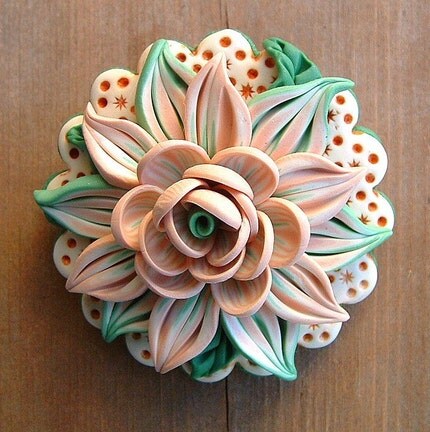
During the fall of 2008, Zuda of ZudaGay participated in an online group activity that resulted in a series of tutorials on her blog, beginning with Day 1 of the 30/30 Day Challenge. By using a "photo story" format, she informs us not only about the creative process she employs while developing her beautiful polymer clay flowers, but she also tempts us to visit her shop to see the final products.


Blog tutorials provide a perfect opportunity for writer/artists to inform readers about their creative process, highlight their work, and create a sense of their trustworthiness. With careful attention to focus, fiber and format, these tutorials become wonderful "freebie" gifts for their readers, and highly effective marketing tools for the artist.

© 2009 Judy Nolan. All rights reserved. Please note that the images in this post are owned by the artists and may not be used without permission. Simultaneously published at http://sparklines.blogspot.com.

Wednesday, March 4, 2009

Capturing your creative ideas

Although it would be interesting to see, creative ideas do not rain down from the sky, waiting to be plucked Venus fly trap-like from the air. Instead, they are usually the result of the subconscious part of the mind acting upon sensory experiences—in other words, what we see, hear, smell and touch. "So you see," says newspaper columnist and writer Brenda Ueland, the first female reporter for the Minneapolis Tribune, "imagination needs noodling—long, inefficient, happy idling, dawdling and puttering."

The importance of involving the senses, and of exposing oneself to varied experiences, is that artists draw upon both to generate ideas. Julia Cameron, in The Artist's Way: A Spiritual Path to Higher Creativity, stresses that art is an "artist-brain pursuit" that needs to be fed with images. "The artist brain is the sensory brain," she writes, "sight and sound, smell and taste, touch." She explains that we need to stock our artistic reservoir "like a well-stocked trout pond," filling it with all kinds and sizes of proverbial fish that can be cooked up in different ways. That this is the case is evidenced by various members of the BBEST team, although not everyone generates ideas deliberately.

Sara of LaughingOtterJewelry claims she does not really have methods for generating ideas, yet imagery is clearly tied closely to how ideas spring into her mind. "There are two ways I get my ideas for my jewelry pieces . . . from the beads themselves—their energy. They 'speak' to me and I can visualize in my mind how the piece will come together. I also sometimes get ideas from vintage jewelry or from the person themselves (commissions). These are usually thoughts or ideas of what they think they want or how they want it to feel. Then I take the thoughts and ideas, and create."

"I get ideas all the time," says Chris of Designs by Christine. "Anything that I see becomes an idea . . . nature, designs that someone does in another medium will spin a design in glass for me, and can be a design as I try to think of it in glass. Listening to music can even inspire my designing in glass, and then drawing something or doodling can also inspire a design. Certain colors will give me designs also. Sometimes when working on a project, another idea comes to me, so I can get an idea from an idea."


Chris, in other words, employs some basic principles of creative problem-solving that allow her to generate new ideas. According to Donald J. Treffinger, Ph.D., president of the Center for Creative Learning in Sarasota, Florida, these idea-generating principles include:
  • deferring judgment, or letting ideas simply flow without analyzing them until later
  • striving for quantity, or seeking lot of options
  • freewheeling, or giving yourself permission to be playful, and
  • seeking combinations, or allowing one idea to lead to another or be combined with another.
Meg Mateo Ilasco, author of Craft Inc.: Turn Your Creative Hobby Into a Business, points out that to generate ideas, it's important to take a break from your creative patterns or habits. "For example," she says, "if you're typically a verbal person, try drawing, or if you're a visual thinker, try writing."

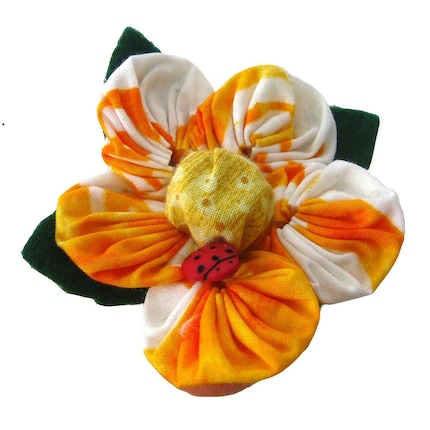
This is exactly how creative ideas come to Rose of Big Island Rose Designs. She says that creative ideas come to her when she least expects them, when she needs a break from something else, when she's working, goofing off or even resting. They also come to her when she sees something at a craft show or in a magazine. "I think about how I can do it my way. That's how the yoyo pineapple was born; I saw one made of folded fabric and thought to do it with yoyo's." Rose doodles at work, and has started writing her blog entries on the bus.

Liz of Liz Plummer says that going for a walk often helps her generate ideas or think things through, after which she brainstorms by writing down her ideas. Rhythmic or repetitive activities such as walking, needlework, cooking, vacuuming and the like do, in fact, help our subconscious mind generate ideas. "Why do I get my best ideas in the shower?" Albert Einstein is said to have asked. Ideas bubble up through our subconscious minds to the surface, challenging us to capture these ideas in a systematic way. Liz uses sketchbooks and notebooks, or whatever is handy, to write down ideas as they occur to her. She also uses "morning pages," as described by Julia Cameron in The Artist's Way. "If it's something I want to find again, I put asterisks all round it," says Liz. "And I have a box which I keep of photos that I find inspiring."


Liz describes morning pages as an exercise in which you write for three pages every morning. "It's just a 'stream of consciousness' thing where you write down whatever comes into your head without filtering it. It is meant to clear your mind of all the annoying day to day stuff so you can get creative. But I also use it if I have to think about something, just to mull it over. There's something about writing something down that helps me think." Julia Cameron describes morning pages as a meditation exercise, similar to practicing yoga to expand your consciousness.

Berit of Singing Images uses repetition in a deliberate manner to generate ideas. "I like to start with a theme, like bottles," she says, "and then repeat, repeat, repeat, and see where the work takes me." She does not really have a method to track her ideas, but does have "lots of little scribbles on lots of small pieces of paper in lots of drawers."


Several BBEST members are so "open" to the activity of their subconscious minds, that their challenge is not finding ways to generating ideas, but to record them instead. Elaine of rosegardenfae, for example, looks often to nature and its patterns, to colors and their variations, and to the work of others on the Internet, in books, magazines and on Etsy. To keep track of all of her ideas, she says, "I keep several notebooks filled with ideas, notes, and illustrations, as well as an online file that contains pictures of things I'd like to do."


Mike of GimmeBeads, who works with glass, says he spins imaginary rods of glass in his head "nearly 24/7." He points out, "I can't even find my jeans in the morning, so having any organized method of keeping up with ideas is out of the question. I have so many of them," he says, "I'm never at a loss for something to work on."


Similarly, Suz of whimseys says, "I don't really think much about how to get ideas. They just pop into my head, and then I am compelled to act on them. No matter what time of day it is, I just gotta do it. Then I just go with the flow—no real planning—I let the creative process take over. Sometimes it lasts for days and days, and the ideas keep coming—fast—but then there are times when nothing is happening, no matter how hard I try to think about it." Suz does not generally write down her ideas, but if she does, she tends to act on them right away.


Joon of joonbeam's biggest dilemma is finding ways to capture the images and ideas that pop into her head. "I have notebooks of all shapes and sizes scattered about," she says. "I do keep specific Etsy notebooks. I prefer unlined paper, which, for some reason, is harder to find in attractive notebooks. Once I get that Bind-it-All . . . look out, world! But, seriously, how do we keep track of so many ideas? If I were to capture even 1% of mine, I'd be jotting and drawing all day long. I'm fortunate to have Scout [Joon's daughter], because if I mention an idea to her, she will recall it months, or even years later, at random moments. Internal Photographic Memory. Now, there's an idea."


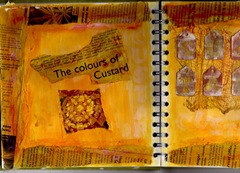
Several BBEST artists have organized approaches to gathering ideas they have generated. For Myfanwy of SassaLynne at Etsy, since most of her ideas evolve as the result of playing with color, keeping a series of journals and sketch books is essential.

Sample journal page: "The colours of Custard,"
by
Sassa Lynne at Etsy

"The way that I mix dye results in unexpected combinations, and so often I find that this inspires me," Myfanwy explains. "The colors will suggest something and I'm away. Sometimes I translate the design into artwork; paint on paper is a usual starting point. But at other times I work very intuitively and the work just evolves."

Barb of BLAZINGNEEDLES, who specializes in original machine knitting and hand crocheted designs, uses a combination of computers and a dry erase board to keep track of her ideas. "The white board keeps my ideas for future projects when I get the time," she explains. "There are usually 50 ideas there. So many ideas, so little time!"

Dry erase board,
used by
BLAZINGNEEDLES
to track ideas


Barb tries to look at everyday items from a different perspective, for example, imagining what else she can develop from a felted sweater. "Many times friends will ask me to make something I never thought of—a golf club cover. I like to shop at dollar stores and see what they have that I can use. I have bins of cute things that I bought on sale that may give me inspiration some day."


Like Barb who collects items from dollar discount stores, Eileen of Chauncey Design has a collection of her own that inspires her. "I don't have a method of generating ideas," she says, "except for my obsession with supply catalogs. Looking at all the latest sometimes gives a spark, but always a drool." She adds that she is not consistent at keeping track of ideas, although she has jotted down her ideas in a notebook on occasion. "I think if the idea is any good, I should be able to remember it. If I forget it, it must have been forgettable."


Barb and Chauncey's approach to idea generation is what textile artist Susie Monday refers to as "accidental collections." Susie, who has a vintage collection of table cloths, says that accidental collections consist of items that appeal to you, that you pick up here and there, and one day you realize there is a pattern to what you have been collecting. "And whether you think your accidental collection has anything to do directly with your art or not," she says in her blog post, Vintage Inspiration & Accidental Collections, "it probably has something to do with your strong suits and inclinations in the sensory world." Being aware of your preferences on a more conscious level is key to taking advantage of their inspiration.

Whether you capture the ideas you generate in detailed notebooks or sketches, on index cards or in computer files, being able to translate the subconscious meanderings of your mind in a more organized fashion allows you to take advantage of what Meg Mateo Ilasco calls the ideation process. "Whether your mind is forever churning out ideas or your inspiration comes in occasional spurts of brilliance, you need to be ready to seize these creative opportunities."

© 2009 Judy Nolan. All rights reserved. Please note that the images in this post are owned by the artists and may not be used without permission. Simultaneously published at http://sparklines.blogspot.com.